






Choosing a reliable automotive lighting supplier in China is an important decision for automotive parts importers, wholesalers, distributors, repair shops, and modification businesses. The right supplier can help your business maintain consistent product quality, control purchasing costs, reduce customer returns, and build a stable supply chain.
China offers a wide range of automotive lighting products, including replacement headlights, LED headlamps, taillights, fog lights, and customized aftermarket lighting solutions. However, not every supplier offers the same manufacturing capabilities, quality standards, product coverage, or export services.
For B2B buyers, finding a competitive price is only the first step. You also need to verify vehicle compatibility, inspect product quality, understand minimum order quantities, review warranty terms, and confirm that the products meet the requirements of your target market.
This guide explains how to choose a reliable automotive lighting supplier in China and what international buyers should check before placing a wholesale order.
Why Choosing the Right Automotive Lighting Supplier Matters
Automotive lighting products play an important role in vehicle visibility, signaling, and overall appearance. For distributors and repair businesses, product reliability and accurate fitment can directly affect customer satisfaction and operating costs.
A dependable supplier can help you maintain a consistent product range and respond more effectively to changing market demand.
Reducing Product Quality Risks and Customer Returns
Poor-quality automotive lights can lead to premature failures, moisture intrusion, electrical problems, damaged lenses, or incorrect fitment.
For wholesalers, these problems may result in warranty claims, returns, additional shipping costs, and damage to business relationships.
Before selecting a supplier, ask about its quality-control procedures, product specifications, inspection standards, and defect-handling process.
Request samples whenever possible and check the products against your requirements before committing to a large order.
Improving Wholesale Profit Margins and Inventory Management
A low purchase price does not automatically guarantee a profitable product.
Importers must also consider freight, insurance, customs duties, applicable taxes, warehousing, potential defects, and local distribution expenses.
A reliable supplier should provide clear quotations, accurate product information, and realistic delivery schedules. These details help buyers estimate landed costs and plan inventory more effectively.
For products with different specifications or vehicle applications, compare quotations on an equivalent basis rather than comparing unit prices alone.
Building a Stable Long-Term Supply Chain
Automotive parts businesses often depend on repeat orders and consistent product availability.
If a supplier frequently changes specifications, misses delivery deadlines, or provides unclear product information, maintaining stock and serving customers becomes more difficult.
Look for a supplier that communicates clearly, documents agreed specifications, and can explain how it manages production, inspection, packaging, and repeat orders.
Meeting the Needs of Automotive Parts Distributors and Repair Shops
Different B2B customers require different lighting products.
Repair shops may prioritize replacement headlights and taillights that match original vehicle specifications. Wholesalers may need broad vehicle coverage, competitive volume pricing, and dependable replenishment. Modification businesses may look for customized LED lighting and distinctive styling options.
Before selecting a supplier, identify your customer group and confirm that the supplier can support its product and purchasing requirements.
What Types of Automotive Lighting Products Should You Source from China?
A well-planned automotive lighting catalog can help distributors serve multiple customer segments without relying on a single product category.
The best product selection depends on local demand, target vehicle applications, purchasing budgets, and the supplier's actual capabilities.
OEM Replacement Headlights and Headlamp Assemblies
Replacement headlights are commonly purchased for vehicle repairs, collision damage, and replacement of worn or damaged assemblies.
When sourcing these products, confirm:
Vehicle make, model, and production year
Trim level and original lighting configuration
Left-hand or right-hand assembly
Connector type and electrical specifications
Lens design and housing dimensions
Relevant technical and compliance requirements
OEM-style replacement products should not be described as genuine original-equipment parts unless that status can be substantiated.
LED Headlights and Aftermarket Headlight Upgrades
LED headlights and aftermarket lighting upgrades can offer distributors additional product choices.
Depending on the vehicle application, available designs may differ in lighting technology, appearance, electrical requirements, and installation method.
Ask the supplier for technical specifications, fitment information, installation requirements, and supporting performance documentation.
Also verify whether the product is suitable for the intended road-use application in your target country.
Automotive Taillights and Rear Lamp Assemblies
Taillights are an important category for automotive replacement-parts suppliers.
Products may include standard replacement rear lamps, LED taillights, and customized aftermarket assemblies.
Before placing an order, confirm brake-light, turn-signal, and reverse-light functions, along with connector details and vehicle compatibility.
For wholesalers, accurate left-side and right-side product identification is particularly important because similar-looking assemblies may not be interchangeable.
Fog Lights and Auxiliary Lighting Products
Fog lights and auxiliary lighting can complement an existing headlight and taillight catalog.
Depending on the target vehicle, buyers may consider replacement fog lamps, LED fog-light assemblies, and selected auxiliary products.
Check installation requirements, electrical compatibility, beam characteristics, and the intended application. Additional lighting products should be evaluated against applicable local road-use requirements.
Customized Automotive Lighting for Different Vehicle Models
Customized lighting products can help automotive modification businesses differentiate their offerings.
Potential options include distinctive LED designs, sequential indicators, and model-specific aftermarket styling.
However, customization may affect MOQ, production lead time, tooling expenses, and technical documentation requirements.
Confirm the final design, product specifications, packaging, and compliance expectations before authorizing production.

Manufacturer vs. Trading Company: Which Supplier Is Better?
Both manufacturers and trading companies can serve international buyers. The right choice depends on your product requirements, order size, customization needs, and preferred purchasing process.
Advantages of Buying Directly from an Automotive Lighting Manufacturer
Working directly with a manufacturer may provide closer communication about production, specifications, customization, and quality control.
Potential advantages include:
Direct communication about technical requirements
Better visibility into manufacturing and inspection processes
Access to product development or customization options, where available
More direct coordination of repeat orders
Opportunities to discuss volume-based pricing
These benefits are not automatic. Buyers should verify which processes the supplier performs in-house and which are handled by outside partners.
When Working with a Trading Company Makes Sense
A trading company may be useful when buyers need products from several factories, have limited purchasing volumes, or prefer a single contact for a broad product range.
Some trading companies also provide sourcing support and export coordination.
When evaluating one, ask how it verifies product quality, manages supplier relationships, handles defects, and maintains consistent specifications across repeat orders.
How to Verify a Supplier's Actual Manufacturing Capabilities
Do not rely exclusively on a website, company profile, or product photographs.
Ask for a factory introduction, production information, quality-control details, and a clear explanation of the supplier's role.
If manufacturing capacity is central to your decision, consider a live video tour, a third-party factory audit, or an on-site visit where practical.
The goal is to establish what the supplier can actually deliver rather than making assumptions based on marketing claims.
Questions to Ask Before Choosing a Long-Term Supplier
Before starting a business relationship, ask:
Which automotive lighting products do you manufacture or supply?
Which vehicle models and production years are covered?
What is the MOQ for each product?
Can you provide samples and technical specifications?
What quality checks are performed before shipment?
What are the normal production lead times?
What warranty terms and defect-handling procedures apply?
Can you provide the documentation required for my destination market?
The supplier's ability to answer these questions clearly is an important part of the evaluation.
10 Factors to Consider When Choosing an Automotive Lighting Supplier in China
A structured supplier evaluation helps importers compare potential partners consistently.
1. Manufacturing Experience and Industry Expertise
Look for suppliers with relevant experience in the product categories you need.
A company specializing in replacement headlights may have different capabilities from one focused on customized LED assemblies.
Ask about its product range, typical applications, manufacturing arrangements, and experience serving overseas B2B customers.
Do not treat years in business alone as proof of product quality.
2. Product Range and Vehicle Application Coverage
A supplier with a broad catalog may help distributors consolidate orders and reduce the number of purchasing contacts.
However, a large catalog is valuable only if the supplier can provide accurate application information and dependable products.
Request a catalog or application list and identify which products match your target market.
3. Product Quality and Quality Control Procedures
Ask the supplier to explain its inspection procedures and how it handles nonconforming products.
Depending on the product, relevant checks may include visual inspection, assembly consistency, electrical functions, sealing performance, and packaging condition.
Where technical performance is important, request relevant test reports or inspection records.
4. OEM Replacement and Customization Capabilities
Determine whether the supplier offers the replacement and aftermarket products your customers need.
If you plan to sell customized lights, confirm design options, development requirements, sample approval procedures, and minimum production quantities.
Ensure that any customization remains compatible with the intended vehicle application and applicable regulations.
5. Minimum Order Quantity and Wholesale Pricing
MOQ varies by product, manufacturing process, and customization requirements.
Ask for quotations at different order quantities and clarify whether mixed-model orders are accepted.
Also confirm the quotation's validity period, payment terms, packaging costs, and any additional charges.
6. Production Capacity and Delivery Lead Times
A supplier should provide realistic estimates for sample development, mass production, inspection, and dispatch.
Ask whether the product is in stock or made to order.
For repeat purchases, discuss how production schedules are confirmed and how the supplier communicates potential delays.
7. Product Certifications and Compliance Documentation
Technical and certification requirements depend on the product and destination market.
Ask for relevant documentation and verify that it applies to the exact product being purchased.
A certificate for one product or market does not necessarily demonstrate compliance with every requirement elsewhere.
For regulated applications, confirm the requirements with the appropriate authority or a qualified compliance professional before ordering.
8. Packaging Quality and Export Experience
Automotive lights can be vulnerable to scratches, broken lenses, and impact damage during transportation.
Ask how the supplier protects individual assemblies, organizes export cartons, and labels products for identification.
If the shipment is large, request photographs of the completed packaging and confirm the carton dimensions and quantities.
9. Warranty Policy and After-Sales Support
A clear warranty policy helps buyers understand how defects will be handled.
Confirm the warranty period, covered issues, claim procedure, required evidence, and available remedies.
Ask whether the supplier can investigate recurring problems and trace affected production batches when necessary.
10. Communication, Transparency, and Long-Term Cooperation
Reliable communication is essential for international purchasing.
The supplier should provide understandable quotations, accurate specifications, written order confirmations, and timely updates.
For long-term cooperation, establish a consistent process for approving samples, confirming changes, checking production, and handling after-sales issues.

How to Evaluate the Quality of Automotive Headlights and Taillights
A supplier's quality claims should be supported by appropriate inspection and documentation.
Buyers should define acceptance criteria before production rather than waiting until goods arrive to decide whether the quality is acceptable.
Check Lens Materials and Housing Construction
Inspect the lens and housing for cracks, scratches, poor assembly, and visible defects.
Ask the supplier for material specifications where these affect performance, durability, or fitment.
Material appearance alone cannot confirm long-term performance, so use relevant technical documentation and product testing where appropriate.
Test Lighting Functions and Electrical Compatibility
Verify that the product performs its intended functions and matches the vehicle's electrical requirements.
Depending on the assembly, checks may include low beam, high beam, turn signals, brake lights, reverse lights, or other specified functions.
Connector design and electrical compatibility should be confirmed before the bulk order is approved.
Inspect Sealing and Water-Resistance Performance
Moisture intrusion can affect lighting performance and customer satisfaction.
Ask the supplier what sealing or water-resistance checks are performed and request relevant test records when available.
Do not assume a product has a particular IP rating or waterproof performance level without supporting evidence.
Verify Vehicle Fitment and Connector Specifications
Product fitment must be verified against the intended vehicle.
Confirm the model, production year, trim, connector, dimensions, mounting points, and other relevant specifications.
For uncertain applications, request samples or compare the proposed assembly with reliable original-part information.
Review Product Test Reports and Quality Inspection Records
Relevant test reports can provide evidence about a product's specified performance.
Check the product identification, test scope, issuing organization, date, and whether the report applies to the exact model being purchased.
Ask the supplier to explain how the product is inspected before shipment and how inspection results are recorded.
Request Samples Before Placing a Bulk Order
Samples provide an opportunity to evaluate quality and compatibility before committing to larger quantities.
Inspect the sample against the agreed specification and retain a record of the approved version.
For repeat orders, use the approved sample and written specifications as reference points for consistency.
How to Verify an Automotive Lighting Supplier's Reliability
Supplier verification should combine documentary checks, product evaluation, and clear commercial agreements.
Review the Supplier's Company Profile and Business History
Review the company's legal business details, business history, contact information, and stated product categories.
Where possible, check relevant registration information and confirm that the contracting entity matches the payment and invoice details.
A professional website is useful but should not be treated as sufficient proof of reliability.
Request Factory Photos, Videos, and Production Information
Request current photographs or videos showing relevant production, inspection, warehouse, and packaging activities.
If the supplier claims to manufacture products directly, ask which operations are performed in-house.
For larger or strategically important orders, a third-party audit may provide additional confidence.
Evaluate Product Catalogs and Technical Documentation
A useful product catalog should identify vehicle applications and product specifications clearly.
Check whether the supplier can provide consistent product references, photographs, dimensions, connector details, and available technical documentation.
Vague descriptions and inconsistent model-year information can create avoidable ordering problems.
Check Sample Quality and Order Consistency
A good sample is an important starting point, but repeat-order consistency matters just as much.
Agree on the specifications that must remain unchanged, including product design, materials, electrical functions, packaging, and any other critical requirements.
For larger orders, arrange an appropriate inspection before shipment.
Confirm Payment Terms and Written Purchase Agreements
Before sending payment, confirm the legal identity of the supplier and the details of the receiving account.
Use a written purchase order or contract covering product specifications, quantities, prices, delivery terms, inspection arrangements, and remedies for agreed defects.
Be cautious of unexplained last-minute changes to payment instructions.
Identify Warning Signs of Unreliable Suppliers
Potential warning signs include:
Prices far below comparable quotations without a credible explanation
Refusal to provide basic product specifications
Inconsistent company or payment information
Pressure to pay immediately without clear documentation
Unverifiable quality or certification claims
Repeated changes to agreed delivery dates
Unclear warranty or defect-handling arrangements
Any single warning sign deserves investigation. Several combined warning signs may justify choosing another supplier.
How to Compare Automotive Lighting Wholesale Prices
Comparing prices correctly helps importers balance purchasing costs with quality and service.
Compare Product Specifications Before Comparing Prices
Make sure the quotations refer to the same product application and specification.
Differences in lighting technology, materials, functions, packaging, and customization may explain price differences.
Request clarification before assuming that two similar-looking products are equivalent.
Understand MOQ and Volume-Based Pricing
Ask for pricing at several quantities where practical.
A larger order may reduce the unit price, but it also ties up more working capital and increases inventory risk.
Choose an order quantity that fits expected demand and replenishment requirements.
Calculate Shipping Costs and Total Landed Cost
Include freight, insurance, customs duties, applicable taxes, clearance fees, handling, and local delivery costs in your comparison.
Check which costs are included in the supplier's offer and which are charged separately.
This is especially important when comparing quotations with different shipping terms.
Evaluate Warranty Coverage and Potential Return Costs
A cheaper product may become more expensive if defects, returns, or replacement shipments are frequent.
Review the warranty policy and ask how claims are processed.
Where possible, use historical quality and return data to evaluate the supplier's overall commercial value.
Balance Purchase Price with Long-Term Product Value
The best supplier is not necessarily the one offering the lowest unit price.
Consider quality consistency, accurate fitment, delivery reliability, documentation, communication, and after-sales support.
A supplier that helps reduce avoidable returns and maintain stable inventory may provide better long-term value.

OEM Replacement Lights vs. Customized Aftermarket Lighting
Understanding the differences between replacement and customized products helps wholesalers build a catalog that matches customer needs.
Key Differences Between OEM-Style and Aftermarket Products
OEM-style replacement lights are generally designed to match a specified original vehicle application.
Customized aftermarket lights may introduce different styling, lighting elements, or appearance features.
The terms describe product positioning and design intent; they do not automatically establish the product's quality, legal status, or genuine OEM origin.
Which Products Are Better for Wholesale Distributors?
Replacement lighting may suit distributors serving repair shops and customers replacing damaged assemblies.
Customized lighting may appeal to modification shops and customers seeking a different vehicle appearance.
The right mix depends on local demand, customer preferences, applicable regulations, and available working capital.
Sourcing Customized LED Headlights and Taillights
Before ordering customized products, confirm the design, technical specifications, MOQ, development cost, production lead time, and packaging.
Request a sample or other suitable approval process before mass production.
If the design includes modified lighting functions, verify that it is appropriate for the intended use and meets applicable technical requirements.
How to Confirm Fitment for Different Vehicle Years and Trims
Never rely on the vehicle model name alone when ordering lighting assemblies.
Different production years and trim levels may use different connectors, mounting points, or lighting configurations.
Use a reliable application list and confirm all relevant details with the supplier before approving the order.
What Documents Should a Reliable Automotive Lighting Supplier Provide?
The documents required depend on the transaction, destination, and product category.
A well-organized supplier should be able to provide the commercial and technical information relevant to the order.
Commercial Invoices and Packing Lists
Commercial invoices generally identify the seller, buyer, products, quantities, prices, and transaction details.
Packing lists describe the shipment's contents and packaging information.
Ensure that the documents match the purchase order and actual goods.
Product Specifications and Vehicle Fitment Information
Request product descriptions, vehicle application information, dimensions, connector details, and relevant technical specifications.
These documents help buyers confirm fitment and support accurate product listings for downstream customers.
Relevant Test Reports and Certification Documents
Where technical compliance or performance claims are relevant, request supporting documentation.
Verify the product covered, the issuing body, the scope of testing, and the requirements the document addresses.
The buyer remains responsible for confirming the applicable requirements for the destination market.
Warranty Terms and Quality Inspection Records
Keep written warranty conditions and relevant inspection records with the order documents.
For recurring orders, record any approved deviations or changes so that both parties understand the agreed specifications.
Export Packaging Details and Shipping Documentation
Confirm the carton count, dimensions, gross weight, net weight, and other information required for transport and customs procedures.
The final shipping documents should accurately describe the goods and remain consistent with the commercial records.
How to Import Automotive Lights from China to Your Country
Once you have selected a supplier, use a structured purchasing process to reduce avoidable risks.
Step 1: Identify Your Target Market and Product Requirements
Research your customer base and determine which lighting products are in demand.
Identify the vehicle models, product types, quantities, and technical requirements you want to source.
Step 2: Shortlist Qualified Automotive Lighting Suppliers
Compare suppliers based on product coverage, manufacturing capabilities, quality procedures, pricing, and communication.
Request the same basic information from each supplier to make the comparison more meaningful.
Step 3: Request Quotations and Product Samples
Ask for a written quotation and clarify MOQ, payment terms, production time, warranty, and shipping arrangements.
Evaluate samples against the specifications that matter to your customers.
Step 4: Confirm Product Specifications and Compliance Requirements
Finalize product applications, connectors, functions, packaging, and inspection criteria.
Before production or shipment, confirm the import and technical requirements applicable in your country.
Step 5: Place Your Order and Arrange Quality Inspection
Approve the purchase order and payment schedule in writing.
Agree on inspection timing and acceptance criteria, particularly for larger orders or customized products.
Step 6: Select a Suitable Shipping Method
Compare sea freight, air freight, and other suitable transport options based on cost, urgency, and shipment size.
Confirm the shipping terms and which party is responsible for each cost and logistical step.
Step 7: Coordinate Customs Clearance and Final Delivery
Prepare the necessary commercial, transport, and import documents with your logistics provider or customs broker.
After customs clearance, arrange final delivery and inspect the received shipment against the purchase order.

How Colombian Importers Can Choose a Chinese Automotive Lighting Supplier
For Colombian buyers, supplier selection should account for local vehicle demand, import costs, shipping arrangements, and applicable product requirements.
Researching Local Vehicle Demand and Replacement-Part Needs
Start by speaking with Colombian distributors, repair shops, and automotive parts retailers.
Identify the vehicle models they service and the lighting products they purchase regularly.
Use this information to prioritize product applications instead of relying solely on general global market trends.
Selecting Headlights and Taillights for Target Vehicle Models
Consider the specific vehicle applications your customers request.
Depending on verified demand, product research may include Toyota Hilux, Ford Ranger, Chevrolet vehicles, Nissan Frontier, and other models sold in Colombia.
Confirm production years, trim differences, connectors, and product functions before ordering.
Checking Colombian Import Duties and Technical Requirements
Before confirming the order, identify the appropriate tariff classification and applicable customs duties, VAT, documentation, and technical requirements.
Colombian importers can consult the official DIAN website and its tariff consultation system, or work with a qualified customs broker.
Do not assume that every automotive lighting product has the same tax rate or certification requirements.
Comparing Shipping Options from China to Colombia
Request a shipment-specific quotation that identifies freight, origin charges, destination charges, estimated transit time, and other relevant costs.
For large orders, compare suitable sea-freight options. For samples or urgent replenishment, consider whether air freight is commercially justified.
Calculating Landed Costs for Wholesale Distribution
Calculate the complete cost of receiving the goods in Colombia, including product costs, transportation, insurance, duties, taxes, clearance, and delivery.
Use the landed cost to establish wholesale pricing and assess expected margins before committing to a large order.
Why Work with HUAERRUI for Automotive Lighting Products?
HUAERRUI focuses on automotive exterior accessories and vehicle lighting products for international B2B customers. For importers, wholesalers, distributors, repair businesses, and modification shops, the first step is to identify the product applications and supply requirements that match their market.
Buyers should confirm the specifications and availability of individual products directly with the supplier.
A Broad Range of Automotive Exterior Parts and Lighting Products
For businesses sourcing multiple categories of automotive exterior parts, a supplier with a suitable product range can help simplify purchasing.
Depending on confirmed catalog availability, buyers can inquire about vehicle lighting products alongside other automotive exterior accessories.
Replacement Lighting and Aftermarket Product Options
Different customers may require standard replacement lamps or customized aftermarket lighting.
When contacting HUAERRUI, specify whether you need headlights, taillights, fog lights, or a particular styling option so that the relevant product range can be identified.
Product Selection for Different Vehicle Applications
Provide the vehicle make, model, production year, trim, and other relevant fitment details.
This information helps clarify which products should be quoted and reduces the risk of ordering an incompatible assembly.
Quality Control and Product Specification Confirmation
Before placing an order, discuss the available inspection procedures, technical specifications, packaging, and relevant product documentation.
For larger orders, agree on the acceptance criteria and inspection arrangements in writing.
Wholesale Inquiries and Long-Term B2B Cooperation
For repeat business, clear communication about order quantities, production lead times, warranty terms, and shipping arrangements is essential.
HUAERRUI welcomes product inquiries from international B2B buyers interested in exploring suitable automotive exterior parts and lighting supply options.
Contact the supplier to confirm available products, wholesale pricing, and order requirements.

Frequently Asked Questions About Automotive Lighting Suppliers in China
How Do I Find a Reliable Automotive Lighting Supplier in China?
Start by identifying suppliers with relevant product experience and a suitable catalog. Check company details, request technical information and samples, compare quotations, review quality-control procedures, and confirm warranty and shipping terms before placing a bulk order.
Is It Better to Buy Headlights Directly from a Manufacturer?
Buying directly from a manufacturer may provide closer communication about production, product specifications, and customization. However, the best option depends on the supplier's actual capabilities, order size, product range, and service quality.
What Is the MOQ for Wholesale Automotive Lights?
MOQ varies by product type, supplier, production process, and customization requirements. Ask for the MOQ for each model and confirm whether mixed-model orders are accepted.
Can I Order Samples Before Placing a Bulk Order?
Many suppliers offer samples, although charges and availability vary. Evaluate samples for appearance, fitment, electrical functions, packaging, and compliance-related documentation before approving a larger order.
How Can I Check the Quality of Chinese Automotive Lights?
Request samples, review technical specifications, ask about inspection procedures, and obtain relevant test reports where available. Define quality requirements in writing before mass production and arrange pre-shipment inspection when appropriate.
What Documents Should I Request from an Automotive Lighting Supplier?
Depending on the transaction, request a commercial invoice, packing list, product specifications, vehicle fitment information, applicable test reports, warranty terms, and relevant shipping documents. Additional import documents may be required by your destination country.
Can Chinese Suppliers Customize Headlights and Taillights?
Some suppliers offer customized designs, but available options depend on their capabilities and product range. Confirm development costs, MOQ, samples, production time, and applicable compliance requirements before ordering.
How Long Does It Take to Import Automotive Lights from China?
The total lead time depends on product availability, sample approval, production, shipping, and customs clearance. Ask the supplier and freight forwarder for separate estimates for production and transportation.
How Can Colombian Importers Verify Product Compliance?
Identify the product's tariff classification and intended use, then check the applicable Colombian import and technical requirements with DIAN, relevant authorities, or a qualified customs broker. Verify documentation for the exact product rather than relying on general supplier assurances.
Contact HUAERRUI to Source Automotive Lighting Products
Choosing a reliable automotive lighting supplier is an important step toward building a competitive automotive parts business. By checking product quality, verifying fitment, comparing total landed costs, and agreeing on clear commercial terms, importers can reduce purchasing risks and develop more stable supply relationships.
HUAERRUI works with international B2B buyers interested in automotive exterior accessories and vehicle lighting products.
If you are a wholesaler, importer, distributor, repair shop, or automotive modification business, contact HUAERRUI to discuss your product requirements.
To receive a more accurate quotation, please provide:
Product type: Headlights, taillights, fog lights, or customized lighting
Vehicle application: Make, model, and production year
Order quantity: Estimated units per model
Product requirements: Specifications, functions, and customization needs
Destination: Country and city
Packaging and shipping preferences: If applicable
Looking for a reliable automotive lighting supplier in China? Contact HUAERRUI to request product information, wholesale pricing, MOQ details, and a quotation for your next order.
Related News
-
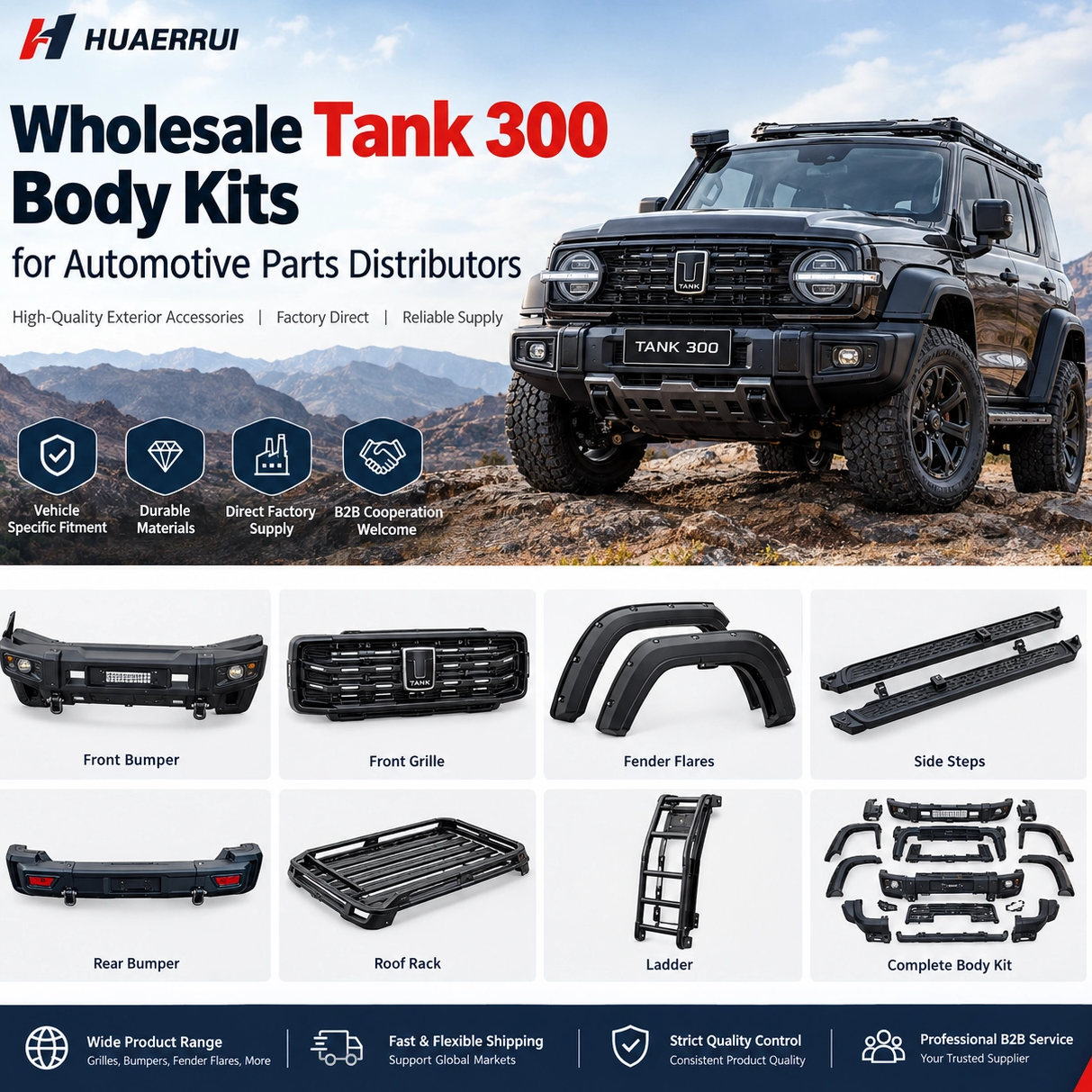 Wholesale Tank 300 Body Kits for Automotive Parts DistributorsIntroductionThe GWM Tank 300 has become a recognizable SUV platform in the automotive aftermarket, attracting interest from businesses specializing in off-road accessories, vehicle customization, and exterior styling upgrades. For automot
-
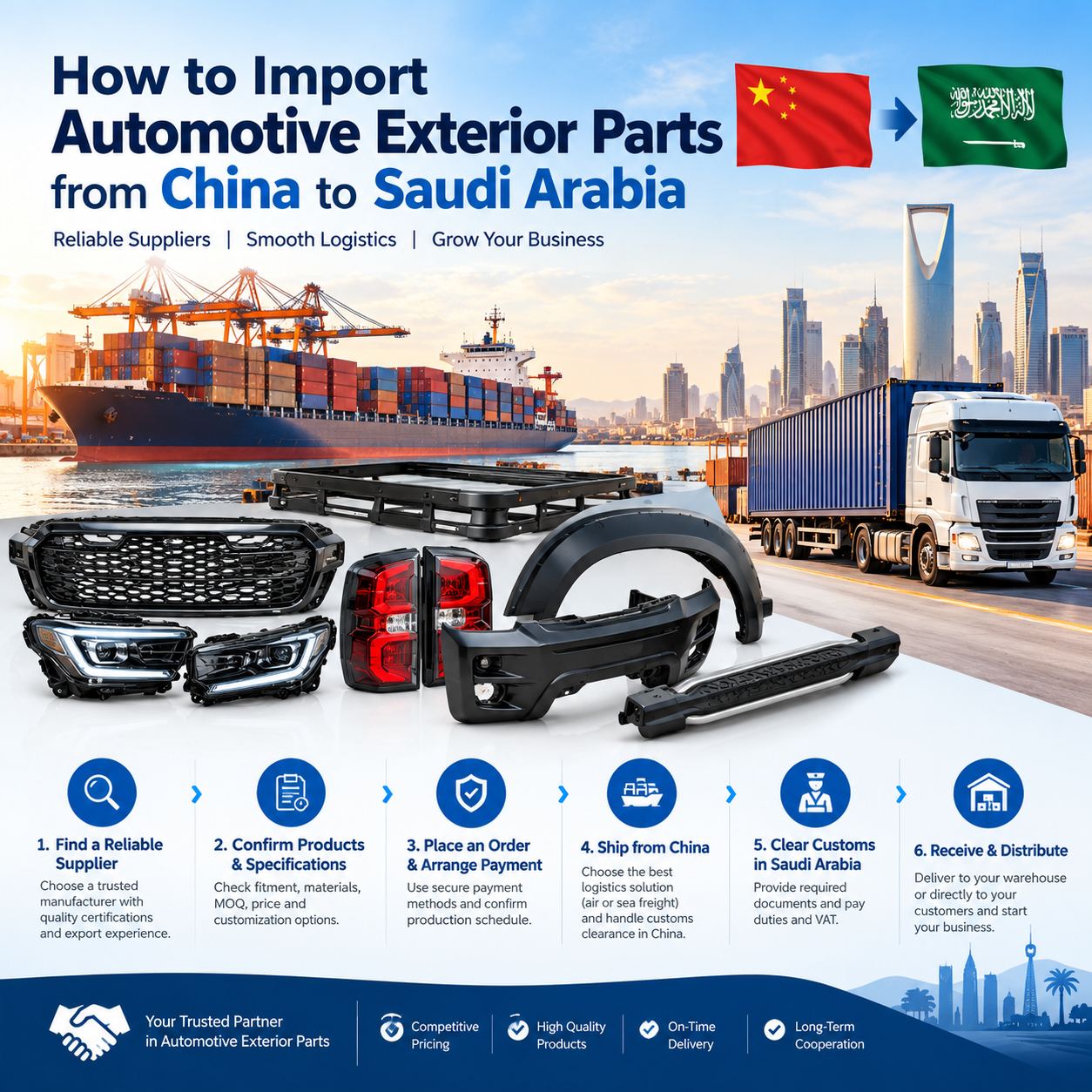 Saudi Arabia has a strong and growing market for pickup trucks, SUVs, 4x4 vehicles, and automotive modification products. For distributors, wholesalers, auto repair shops, and modification businesses, importing automotive exterior parts from China can provide access to a wide range of products, comp
-
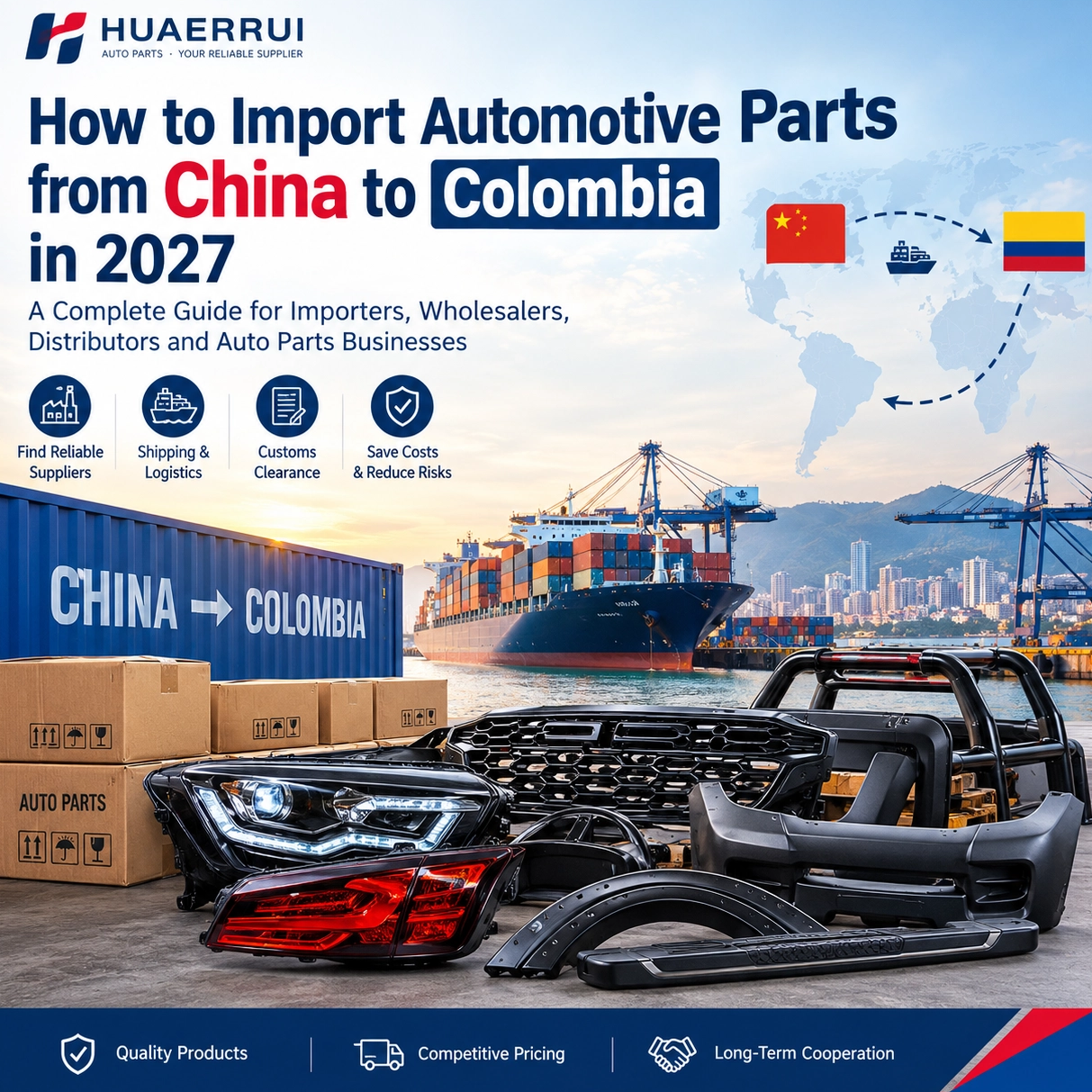 Importing automotive parts from China to Colombia can create valuable business opportunities for auto parts wholesalers, importers, distributors, repair shops, and automotive modification businesses. China offers a wide range of automotive products, including headlights, LED taillights, front grille

