





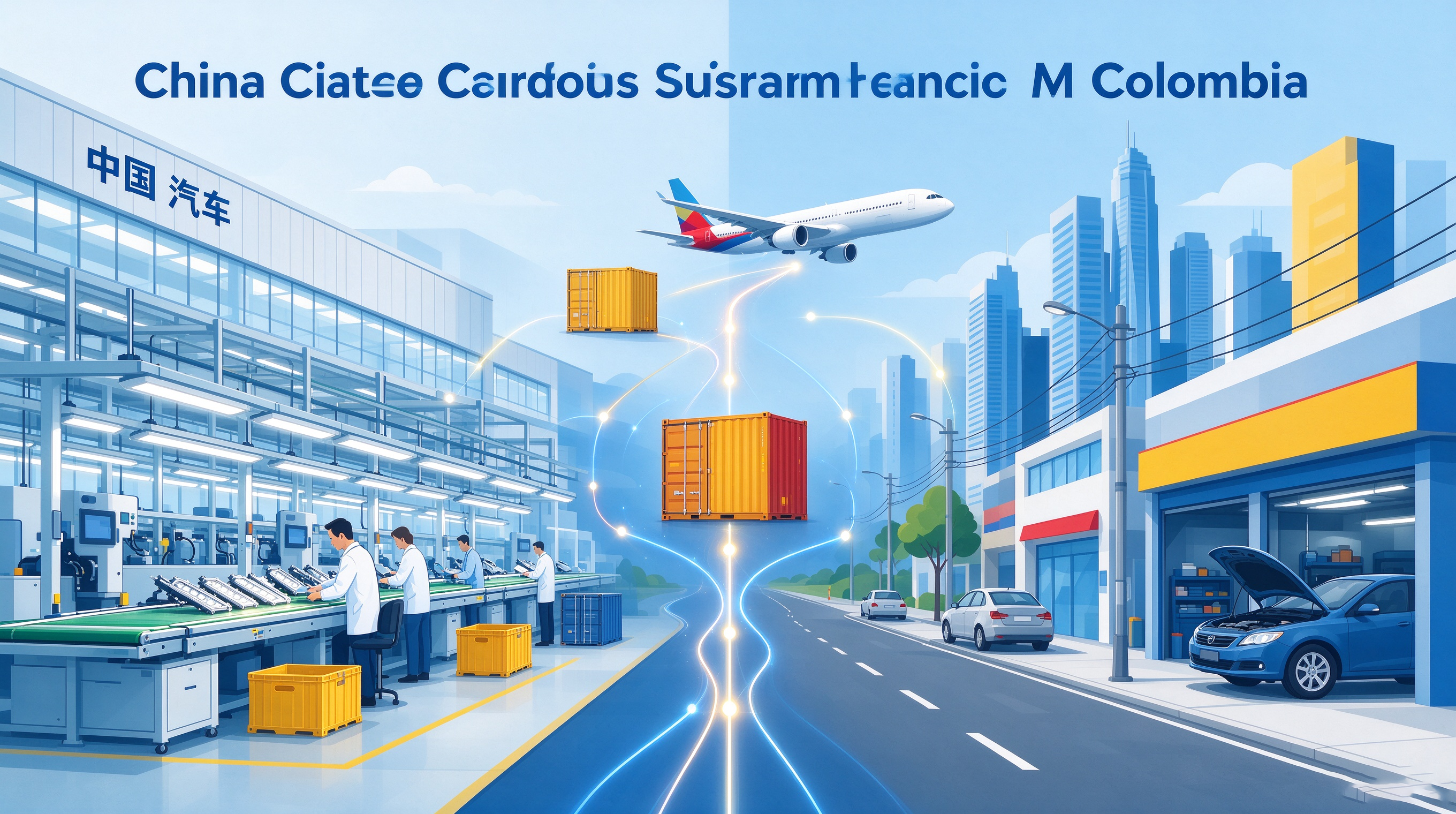
Importing automotive lights from China to Colombia can be an attractive sourcing strategy for automotive parts importers, wholesalers, distributors, repair shops, and aftermarket retailers. Chinese manufacturers offer a wide selection of automotive lighting products, including headlights, taillights, fog lights, LED replacement lamps, and customized lighting solutions for different vehicle models.
However, successful importing involves more than finding a competitive factory price. Colombian buyers also need to evaluate supplier reliability, verify product compatibility, understand customs requirements, calculate the total landed cost, and arrange safe international transportation.
This guide explains how to import automotive lights from China to Colombia in 2026, from selecting the right products and manufacturers to managing shipping, customs clearance, and long-term supplier relationships.
Whether you are an established automotive parts importer or a distributor expanding your product range, this guide will help you make more informed purchasing decisions.
Why Import Automotive Lights from China to Colombia?
China is an important sourcing destination for automotive aftermarket products. For Colombian businesses, working directly with Chinese manufacturers can provide access to a broader range of lighting products and more flexible purchasing options.
Before placing an order, importers should compare product quality, compatibility, supplier capabilities, shipping expenses, and applicable import requirements rather than choosing a supplier based on price alone.
Competitive Wholesale Prices and Manufacturing Costs
For automotive parts wholesalers, purchasing directly from a manufacturer can reduce unnecessary intermediary costs and make supplier communication more efficient.
When requesting quotations, compare the following factors:
Unit price at different order quantities
Minimum order quantity (MOQ)
Sample costs and sample shipping fees
Packaging specifications
Production lead time
Warranty terms and after-sales support
A low unit price does not always mean a lower total purchasing cost. For example, a supplier offering inexpensive headlights may charge more for packaging, customization, or shipping.
Colombian importers should calculate the complete landed cost before comparing quotations.
A Wide Range of Automotive Lighting Products
Chinese automotive lighting manufacturers and suppliers can offer different product categories for the replacement and aftermarket markets.
Common products include:
Headlight assemblies for passenger cars and pickup trucks
Rear taillight assemblies and combination lamps
LED headlights and LED taillights
Fog lights and auxiliary lighting
OEM-style replacement lighting
Customized aftermarket lighting designs
Working with a supplier that covers several product categories may also help distributors consolidate orders and simplify purchasing.
Before choosing a supplier, confirm that its actual catalog includes the vehicle models and lighting specifications required by your customers.
OEM Replacement Lights and Custom LED Lighting Solutions
Automotive lighting buyers generally serve different customer groups.
Repair shops and replacement-parts distributors often prioritize compatible replacement headlights and taillights. Automotive modification shops may be more interested in distinctive LED lighting designs, sequential turn signals, or customized styling.
A diversified product range can help importers serve both markets.
When purchasing replacement lights, confirm the exact vehicle year, trim, connector, lens design, and left-hand or right-hand configuration. For customized lighting, request clear specifications and product images before approving production.
Flexible Supply Options for Colombian Importers and Distributors
A reliable supplier should be able to explain its available order quantities, product range, packaging options, and production schedule.
For smaller distributors, a mixed order of several compatible product models may be more practical than purchasing a large quantity of one product. Larger wholesalers may prefer volume orders for frequently requested models.
Ask potential suppliers whether mixed-model orders are accepted, which products are available from stock, and which items require production.
What Types of Automotive Lights Can You Import from China?
The right product mix depends on your target customers, local vehicle population, available capital, and distribution channels.
Before ordering, research which vehicle models your customers maintain and which replacement parts they request most frequently.
Automotive Headlights and Headlamp Assemblies
Headlights are essential replacement parts for collision repairs, damaged-lamp replacement, and certain vehicle upgrades.
Wholesale buyers may consider:
Halogen headlamp assemblies
LED headlamp assemblies
OEM-style replacement headlights
Aftermarket styling headlights
Model-specific headlight assemblies
Compatibility should be a priority. Two headlights designed for the same vehicle model may differ by production year, trim level, lighting technology, connector, or steering configuration.
Request a vehicle application list and verify the specifications before confirming your order.
LED and OEM Replacement Taillights
Taillights are another important category for automotive parts distributors.
Products may include standard replacement rear lamps, LED taillights, smoked-lens styling products, and customized aftermarket assemblies.
When purchasing taillights in bulk, verify:
Vehicle model and production year
Left-side and right-side configurations
Brake, turn-signal, and reverse-light functions
Connector type and electrical compatibility
Lens material and housing construction
Applicable lighting and product-compliance requirements
For distributors, clearly documented fitment information can reduce incorrect orders and avoidable returns.
Fog Lights and Auxiliary Lighting
Fog lights and auxiliary lighting can complement a distributor's existing headlight and taillight inventory.
Depending on the intended application, buyers may consider replacement fog lamps, LED fog-light assemblies, and selected auxiliary lighting products.
However, not every auxiliary light is suitable for every vehicle or road-use application. Confirm the intended use, installation requirements, beam characteristics, and applicable regulations before importing.
Customized Automotive Lights for the Aftermarket
Customized automotive lighting can help modification shops and aftermarket distributors differentiate their product offerings.
Potential product options include distinctive LED designs, sequential turn signals, and model-specific styling upgrades.
Before placing a custom order, discuss tooling requirements, available designs, sample approval, production quantities, and packaging.
Do not assume that every customized lighting product is approved for public-road use. Buyers should verify applicable Colombian requirements for the particular product and application.
Lighting Products for Popular Cars, SUVs, and Pickup Trucks
Vehicle-specific lighting is generally more straightforward to market when the fitment information is clear.
Depending on confirmed demand, Colombian importers may investigate product applications for Toyota Hilux, Ford Ranger, Chevrolet vehicles, Nissan Frontier, Renault vehicles, and other models sold locally.
These are potential research directions rather than a verified ranking of the best-selling vehicles or lighting products in Colombia.
Use local customer requests, distributor sales records, repair-shop feedback, and vehicle registration information where available to determine which models deserve the most inventory investment.
How to Find Reliable Automotive Lighting Manufacturers in China
Choosing a reliable supplier is one of the most important steps in the importing process. A manufacturer should be able to provide accurate product information, consistent communication, documented quality procedures, and realistic delivery commitments.
Check Factory Experience and Manufacturing Capabilities
Start by determining whether the supplier is a manufacturer, a trading company, or a business combining both roles.
Ask for information about its product categories, production arrangements, quality-control procedures, and experience supplying international customers.
Useful questions include:
Which automotive lighting products do you manufacture or supply?
Which vehicle models and production years are covered?
Can you provide product specifications and application catalogs?
What production capacity and lead times can you support?
Can you accommodate custom requirements?
What export packaging options are available?
If direct manufacturing is important to your purchasing strategy, ask which processes are performed in-house and which are outsourced.
Evaluate Product Quality and Quality Control Procedures
Automotive lighting products need to meet the specifications required for their intended applications.
Before placing a large order, ask the supplier how it checks product appearance, assembly consistency, electrical functions, sealing, and packaging.
Depending on the product, inspection may include:
Visual inspection of lenses and housings
Connector and electrical-function checks
Inspection for scratches, cracks, and assembly defects
Relevant sealing or water-resistance tests
Verification of product markings and specifications
Carton and protective-packaging inspection
Ask for relevant inspection records or test reports where available. Any claimed performance rating should be supported by appropriate documentation.
Verify Vehicle Compatibility and Product Specifications
Incorrect fitment can create expensive problems for importers, distributors, and repair shops.
Before approving an order, confirm the exact application and request clear product photographs, dimensions, connector details, and part-number references.
For replacement headlights and taillights, check the vehicle year, trim, original lighting configuration, and other relevant differences.
Where possible, compare the proposed product with the original part or use reliable vehicle application data.
Request Samples Before Placing a Bulk Order
Samples allow buyers to evaluate product quality and compatibility before committing to a large shipment.
For a sample order, check the following:
Whether the product matches the agreed specifications.
Whether the housing, lens, and connectors are properly assembled.
Whether the lighting functions operate as expected.
Whether the product fits the intended vehicle application.
Whether the packaging provides sufficient protection.
If the product is intended for resale, also review its labeling, carton dimensions, and packaging suitability for local distribution.
Compare MOQ, Wholesale Prices, Warranty, and Lead Times
A reliable quotation should contain more than a unit price.
Request a written quotation that includes product specifications, quantity, MOQ, packaging, production lead time, payment terms, warranty conditions, and quotation validity.
For customized products, clarify whether tooling, sample development, or special packaging incurs additional charges.
Compare quotations on an equivalent basis so that differences in product specifications and commercial terms do not distort your purchasing decision.

Step-by-Step Guide to Importing Automotive Lights from China to Colombia
The following process provides a practical framework for commercial automotive lighting imports.
Step 1: Research the Colombian Automotive Parts Market
Begin by identifying your target customers and the product categories they need.
Potential customer groups include:
Automotive parts importers
Regional and national wholesalers
Independent parts distributors
Vehicle repair shops
Automotive modification businesses
Online automotive parts retailers
Ask potential customers which models they service, which products are difficult to source, and what price and quality levels they expect.
This research can help you avoid investing too much capital in slow-moving inventory.
Step 2: Identify the Right Products and Target Vehicle Models
Build an initial purchasing list based on actual customer demand.
For each product, record the vehicle make, model, production year, trim, product type, quantity, and required specifications.
For example, a wholesale inquiry might request Toyota Hilux replacement taillights for specific production years, including left-side and right-side assemblies.
The more accurate the application details, the easier it becomes to obtain comparable quotations and reduce ordering errors.
Step 3: Contact Chinese Manufacturers and Request Quotations
Contact several qualified suppliers and provide the same product requirements to each one.
Your inquiry should include:
Product names and reference numbers
Target vehicle models and production years
Estimated order quantity
Required packaging
Sample requirements
Destination in Colombia
Preferred shipping arrangement
Ask each supplier to separate product costs from shipping and other charges where possible.
This makes it easier to compare quotations and identify potential hidden costs.
Step 4: Confirm Product Specifications and Compliance Requirements
Before paying a deposit or approving production, confirm the final specifications in writing.
Review the product application, dimensions, connector details, lighting functions, packaging, and agreed quality criteria.
Also identify the appropriate Colombian tariff classification and check whether the specific product requires an import authorization, technical conformity documentation, or other approvals.
Do not rely solely on a supplier's statement that a product is suitable for Colombia. The Colombian importer should verify the applicable requirements for the actual product.
Step 5: Place Your Order and Arrange Quality Inspection
Once the quotation and specifications are approved, confirm the purchase order and payment terms.
For larger orders, agree on inspection criteria before production begins. Depending on the order, you may arrange an in-process inspection, a pre-shipment inspection, or both.
Before shipment, verify the quantity, product model, packaging, carton markings, and shipping documents.
A clear inspection agreement can help both parties resolve discrepancies before the goods leave the factory.
Step 6: Choose a Suitable Shipping Method
The most appropriate shipping method depends on order size, delivery urgency, cargo dimensions, and total logistics cost.
Sea freight is often worth evaluating for larger commercial shipments, while air freight may be appropriate for samples or urgent replenishment.
Ask your freight forwarder to compare available routes, estimated transit times, handling fees, cargo protection, and destination charges.
Make sure the quoted delivery timeline distinguishes transportation time from production time and customs clearance.
Step 7: Complete Colombian Customs Clearance and Delivery
Before the shipment departs, coordinate with your Colombian customs broker or qualified import adviser.
Confirm the required import declaration, commercial invoice, packing list, transport document, tariff classification, tax calculation, and any applicable authorizations.
Once the goods arrive, complete the required customs procedures and arrange delivery to your warehouse or distribution facility.
Allow time for document checks, inspections, and other procedures that may apply to the shipment.
Colombian Import Regulations for Automotive Lights in 2026
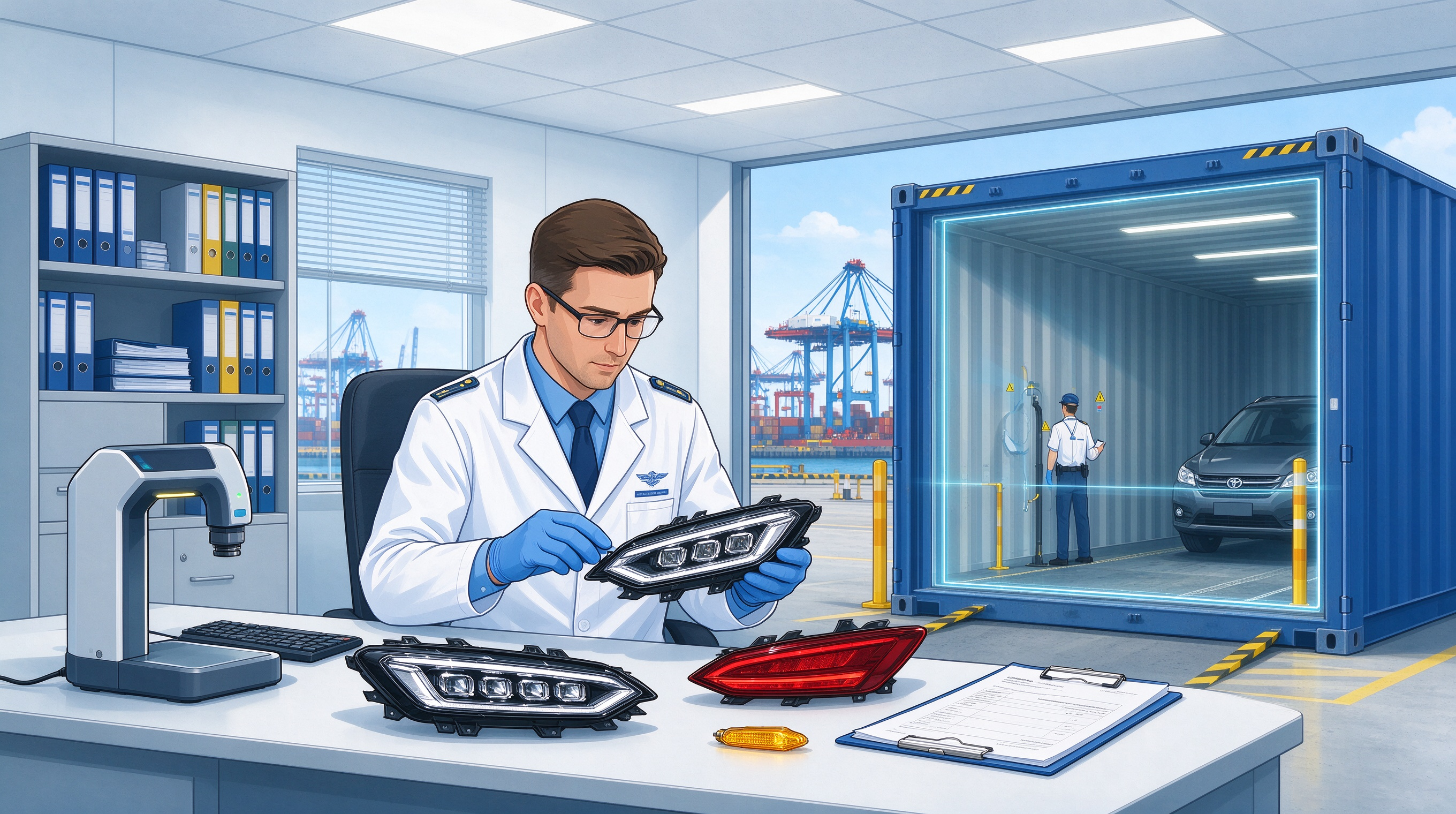
Import regulations should be checked before confirming a commercial order. Requirements can depend on the product's technical characteristics, tariff classification, intended use, and applicable regulations.
Colombia's National Tax and Customs Directorate, known as DIAN, provides official tariff and customs information for importers. Its guidance explains that tariff classification is necessary to determine applicable duties, VAT, and authorization requirements. Official DIAN customs guidance.
How to Identify the Correct HS Code for Automotive Lighting Products
The Harmonized System (HS) is used to classify goods in international trade. Colombia applies its own national tariff subdivisions.
Automotive lighting products should not automatically be assigned the same tariff code. Classification may depend on the product's design, function, and technical characteristics.
Before importing, provide your customs broker with a detailed product description, photographs, technical specifications, and intended use.
You can use DIAN's official tariff consultation system to investigate the relevant tariff classification:
DIAN tariff consultation system.
Confirm the final classification with a qualified Colombian customs professional or seek a formal classification decision when appropriate.
Import Duties, VAT, and Other Potential Import Taxes
Import duties and VAT can significantly affect the total cost of automotive lighting products.
The applicable amounts should be calculated using the correct tariff classification, customs valuation, and rules in force when the goods are imported.
DIAN describes the general customs calculation framework as follows:
Customs value generally incorporates the goods' value, freight, insurance, and other applicable valuation elements.
Customs duty is calculated using the applicable tariff rate and customs value.
Import VAT is calculated according to the applicable tax rules and taxable base.
The actual duty and tax rates must be verified for the specific product. Do not assume that every headlight or taillight has the same rate. DIAN import tax guidance.
Importers should also ask their customs broker whether any specific trade measures, preferences, or special conditions apply to their shipment.
Product Certification and Technical Compliance Requirements
Before importing automotive lights, determine which technical and product-safety requirements apply to the specific lighting assembly and its intended use.
Check whether documentation relating to product conformity, vehicle lighting performance, markings, or other technical requirements is necessary.
Do not assume that a certificate issued in another country automatically satisfies Colombian requirements.
Colombia's RETILAP regulation concerns lighting and public-lighting systems, but automotive vehicle lighting should not automatically be treated as falling within its scope. The product-specific regulatory position must be confirmed before shipment. Colombia Ministry of Mines and Energy — RETILAP.
For modified LED lights and other aftermarket products, buyers should also verify whether the proposed installation and road-use application comply with applicable vehicle and traffic requirements.
Import Documentation Required for Customs Clearance
Depending on the shipment and applicable rules, the importer may need documents such as:
Commercial invoice
Packing list, where applicable
Bill of lading or air waybill
Import declaration
Import license or registration, when required
Certificate or proof of origin, when applicable
Technical conformity documents or other special authorizations, when required
DIAN lists the supporting documents that may be required for an import declaration, including the commercial invoice, transport document, applicable licenses, and packing list. DIAN customs procedures.
Ask your customs broker to prepare a shipment-specific document checklist before the cargo departs China.
How to Work with a Colombian Customs Broker
A qualified customs broker can help importers verify tariff classifications, identify documentary requirements, calculate import taxes, and coordinate customs clearance.
Provide the broker with accurate product descriptions and supplier documents early in the purchasing process.
If you are importing automotive lights into Colombia for the first time, obtaining a landed-cost estimate and compliance review before paying for a large order can reduce financial uncertainty.
How Much Does It Cost to Import Automotive Lights from China to Colombia?
The total import cost includes more than the manufacturer's quoted unit price.
To estimate profitability, calculate the cost of purchasing, transporting, clearing, and delivering the products to your warehouse.
Wholesale Product Prices and Minimum Order Quantities
Product prices vary according to the type of light, materials, lighting technology, vehicle application, order quantity, and customization requirements.
A standard replacement lamp may have a different price structure from a customized LED assembly.
Request quotations for several order quantities to understand the supplier's volume pricing. Also confirm whether the quotation includes individual packaging, export cartons, and any special requirements.
International Shipping and Cargo Insurance Costs
Shipping costs depend on cargo volume, gross weight, route, service level, and destination charges.
Automotive lights often require protective packaging to reduce the risk of broken lenses, scratched surfaces, or damaged housings.
Ask your freight forwarder to compare the total cost of suitable shipping methods rather than focusing only on the initial freight quote.
Cargo insurance should also be evaluated in light of the shipment value, transport risks, and policy exclusions.
Customs Duties, VAT, and Customs Clearance Fees
Importers should estimate the applicable customs duty, VAT, brokerage charges, port or airport handling fees, and other relevant costs.
Some charges depend on the product classification and customs value, while others depend on the shipment's route, volume, and handling arrangements.
Obtain a written estimate from your customs broker before confirming the final purchasing budget.
Packaging, Warehousing, and Local Delivery Costs
Additional expenses may include export packaging, inspection, cargo handling, temporary storage, warehousing, and delivery within Colombia.
For distributors, these costs should be allocated across the shipment to calculate a realistic cost per sellable unit.
Also account for potential damage, warranty claims, and slow-moving inventory when evaluating the economics of a new product range.
How to Calculate the Total Landed Cost per Unit
A basic landed-cost calculation can help you compare suppliers and estimate the gross margin available for distribution.
Total landed cost =
Product purchase cost + international freight + insurance + customs duties + import taxes + clearance and handling fees + other applicable logistics costs.
Landed cost per unit = Total landed cost ÷ Number of sellable units received.
For example, suppose an importer purchases 500 lighting assemblies. The importer should add all applicable shipment costs and taxes, then divide the total by the number of units that are actually available for sale.
Use your real quotation and tax figures rather than relying on a generic online estimate.
Your selling price should also account for local operating expenses, distribution costs, expected returns, and the target gross margin.

Sea Freight vs. Air Freight: Which Is Better for Importing Car Lights?
There is no single best shipping method for every automotive lighting order. The right choice depends on the urgency, shipment size, cash flow, and destination requirements.
Sea Freight for Bulk Automotive Lighting Orders
Sea freight is often worth considering for large wholesale shipments because it can accommodate substantial cargo volumes.
Before selecting a route, compare freight charges, origin and destination handling, estimated transit time, customs procedures, and delivery arrangements.
Protective packaging is particularly important when shipping multiple headlight and taillight assemblies together.
Air Freight for Samples and Urgent Shipments
Air freight can be useful for samples, urgent replacement orders, or products required to address a stock shortage.
However, the cost should be evaluated against the shipment's weight, dimensions, urgency, and potential commercial value.
For large orders, air freight may not be the most economical option.
How to Choose Between LCL and FCL Shipping
Less-than-container-load (LCL) shipping allows an importer to share container space with other cargo. Full-container-load (FCL) shipping uses a dedicated container for the shipment.
LCL may suit smaller orders, while FCL can be worth evaluating for larger shipments.
Compare total charges, cargo volume, handling requirements, and the risk of additional delays. The lowest quoted ocean freight rate does not necessarily produce the lowest delivered cost.
How to Protect Headlights and Taillights During Transportation
Automotive lighting assemblies contain lenses, housings, and other components that can be damaged by impact or poor handling.
Before shipment, confirm that the supplier uses suitable protective materials and export cartons.
Depending on the product, packaging may include protective film, foam inserts, molded supports, dividers, and reinforced outer cartons.
For large orders, request photographs of the final packaging and confirm carton quantities and markings against the packing list.
How to Avoid Common Risks When Importing Automotive Lights
Importing successfully requires controls at several stages, from supplier selection to final delivery.
Preventing Incorrect Vehicle Fitment
Incorrect fitment can lead to customer complaints, returns, and inventory losses.
Provide exact vehicle model years and relevant trim information when requesting a quotation. Confirm connector details, lamp functions, and other specifications before production.
For unfamiliar applications, request samples or compare the product against a reliable original-part reference.
Identifying Poor-Quality Materials and Lighting Components
Do not evaluate quality from product photographs alone.
Ask about material specifications, assembly procedures, relevant testing, and defect-handling arrangements.
For products with specific performance claims, request supporting documentation and define measurable acceptance criteria before ordering.
Reducing Damage During International Shipping
Agree on packaging requirements before production is completed.
For fragile lighting assemblies, confirm that individual products are adequately protected and that cartons can withstand normal transport and handling conditions.
Consider pre-shipment photographs, packaging inspections, and suitable cargo insurance for higher-value shipments.
Avoiding Unclear Warranty Terms and Supplier Communication Problems
Before placing an order, confirm the warranty period, covered defects, claim procedure, evidence requirements, and available remedies.
Clarify whether the supplier offers replacement products, replacement parts, or another agreed resolution for verified defects.
Keep approved specifications, purchase orders, inspection records, and written agreements in an organized format.
Preventing Customs Delays Caused by Incomplete Documentation
Make sure the commercial invoice, packing list, transport documents, product descriptions, and import declaration are consistent.
Verify the tariff classification and any necessary permits or technical documents before the shipment leaves China.
Early coordination between the supplier, freight forwarder, and Colombian customs broker can help identify problems before arrival.
How to Choose the Right Automotive Lighting Products for the Colombian Market
The best inventory strategy is based on verified local demand rather than assumptions about which products are popular globally.
Researching Local Vehicle Demand and Replacement-Part Needs
Talk to local wholesalers, independent parts stores, repair shops, and fleet maintenance businesses.
Ask which vehicle applications they frequently handle, which lamps they struggle to source, and whether they prefer standard replacement products or upgraded lighting.
Use the findings to build a prioritized purchasing list.
Selecting Products for Passenger Cars, SUVs, and Pickup Trucks
Consider different vehicle segments according to your customers' needs.
For example, you might evaluate replacement headlights and taillights for passenger cars alongside lighting products for SUVs and pickup trucks.
Toyota Hilux, Ford Ranger, Chevrolet, and Nissan applications can be investigated as potential product categories, but the final selection should be based on local market research and confirmed fitment requirements.
Balancing OEM Replacement Lights and Customized LED Products
Replacement lighting and customized aftermarket products serve different needs.
Replacement lamps may appeal to repair-focused businesses, while customized LED assemblies may interest modification shops and customers seeking a different appearance.
A balanced catalog can help a distributor serve multiple customer groups without concentrating all inventory in one product category.
Building a Profitable Inventory for Wholesale Distribution
Start with products supported by actual customer demand and reliable application information.
Evaluate each product based on landed cost, expected selling price, supplier lead time, order quantity, warranty exposure, and stock turnover.
For a new product category, consider testing demand with samples or a smaller initial order before expanding inventory.
Why Work Directly with a Chinese Automotive Lighting Manufacturer?
Direct cooperation with a manufacturer can give importers a clearer view of product specifications, production arrangements, and customization options.
The benefits depend on the supplier's actual capabilities, so buyers should verify them before placing an order.
Factory-Direct Wholesale Pricing
Buying directly from a manufacturer may simplify the supply chain and improve communication about pricing and production.
Ask for volume-based quotations and confirm which services are included in the price.
Evaluate the final landed cost rather than assuming that a factory-direct quotation automatically guarantees the lowest total cost.
Consistent Product Quality and Production Management
A supplier with documented production and inspection procedures can help buyers establish repeatable product requirements.
Discuss inspection standards, defect handling, packaging specifications, and batch consistency before placing repeat orders.
For ongoing business, keep a record of approved samples and product specifications to help ensure that future orders match the original agreement.
OEM Replacement and Customization Options
Depending on the manufacturer's product range, importers may be able to source OEM-style replacement lamps and customized aftermarket lighting.
Confirm which options are available for your target vehicle models and whether customization affects MOQ, tooling costs, lead time, or compliance requirements.
Multi-Model Product Supply for Distributors
A supplier covering multiple vehicle applications can simplify purchasing for businesses that serve different customer groups.
Instead of sourcing every lighting category separately, ask whether the supplier can provide headlights, taillights, and other relevant lighting products in one consolidated order.
Check the actual catalog and verify availability for each required application.
Long-Term Cooperation and After-Sales Support
A strong supplier relationship depends on reliable communication, consistent specifications, realistic delivery commitments, and clear after-sales procedures.
For repeat orders, establish a process for confirming quantities, approving changes, reporting defects, and tracking production and shipment milestones.
These procedures can help both parties manage expectations and support sustainable business growth.
Frequently Asked Questions About Importing Automotive Lights to Colombia
How Can I Import Automotive Lights from China to Colombia?
First, research local demand and identify the vehicle applications you want to supply. Then compare Chinese manufacturers, request quotations and samples, verify product specifications, confirm Colombian import requirements, and arrange shipping and customs clearance with qualified service providers.
What Is the Minimum Order Quantity for Wholesale Car Lights?
MOQ varies by supplier, product type, and customization requirements. Some products may be available in smaller quantities, while customized assemblies may require larger orders.
Ask for the MOQ for each model and whether mixed-model orders are accepted.
How Long Does Shipping from China to Colombia Take?
Transit time depends on the shipping method, route, carrier schedule, cargo availability, and customs clearance.
Air freight is generally used when speed is important, while sea freight is commonly considered for larger shipments. Ask your freight forwarder for an estimate covering transportation, handling, and expected clearance time.
What Import Taxes Apply to Automotive Lights in Colombia?
Applicable customs duties and VAT depend on the tariff classification, customs value, and regulations in force at the time of importation.
Consult DIAN's official tariff system and a Colombian customs broker before confirming your order. Do not assume that all automotive lighting products have identical tax rates.
Do Automotive Lights Need Certification to Be Sold in Colombia?
The applicable requirements depend on the specific product, intended use, and relevant Colombian rules.
Before importing, verify whether the product requires particular technical documentation, conformity assessment, markings, or other approvals. A supplier's existing certificates should be checked against the actual requirements rather than assumed to be sufficient.
Can I Order Samples Before Buying in Bulk?
Many suppliers can provide samples, although availability, sample charges, and shipping costs vary.
Samples are useful for evaluating appearance, product specifications, fitment, packaging, and lighting functions before making a larger commitment.
How Can I Find a Reliable Wholesale Automotive Lighting Supplier?
Compare supplier experience, product coverage, documentation, quality-control procedures, MOQ, quotations, lead times, warranty terms, and communication.
Where possible, inspect samples and confirm production and inspection arrangements before placing a large order.
Get a Wholesale Quote for Automotive Lights from China
If you are an automotive parts importer, wholesaler, distributor, repair shop, or modification business in Colombia, choosing the right lighting supplier can help you expand your product range and serve your customers more effectively.
HUAERRUI supplies automotive exterior accessories and vehicle lighting products for international B2B customers. Buyers can inquire about available headlight assemblies, taillights, and other automotive lighting products according to their vehicle applications and purchasing requirements.
When contacting a supplier, provide the following information to help obtain a more accurate quotation:
Product type: Headlights, taillights, fog lights, or customized lighting
Vehicle application: Make, model, and production year
Quantity: Estimated order volume or quantity per model
Specifications: Connector, lighting functions, and other requirements
Destination: City and delivery arrangements in Colombia
Packaging: Standard export packaging or special requirements
Contact HUAERRUI to discuss product availability, wholesale pricing, MOQ, sample options, production lead time, and shipping arrangements for your business.
Looking for a reliable automotive lighting supplier for the Colombian market? Send us your target vehicle models and product requirements to request a wholesale quotation.
Related News
-
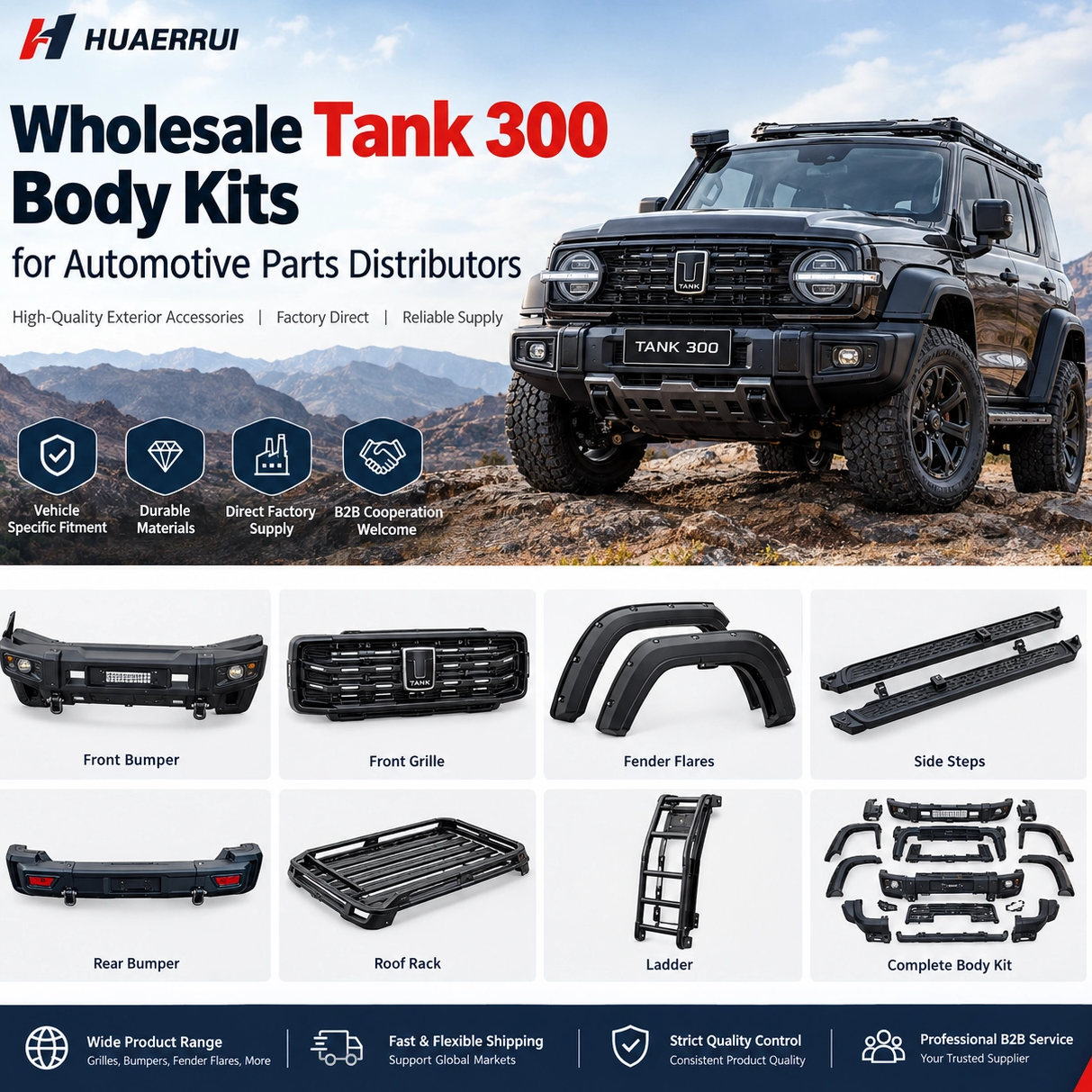 Wholesale Tank 300 Body Kits for Automotive Parts DistributorsIntroductionThe GWM Tank 300 has become a recognizable SUV platform in the automotive aftermarket, attracting interest from businesses specializing in off-road accessories, vehicle customization, and exterior styling upgrades. For automot
-
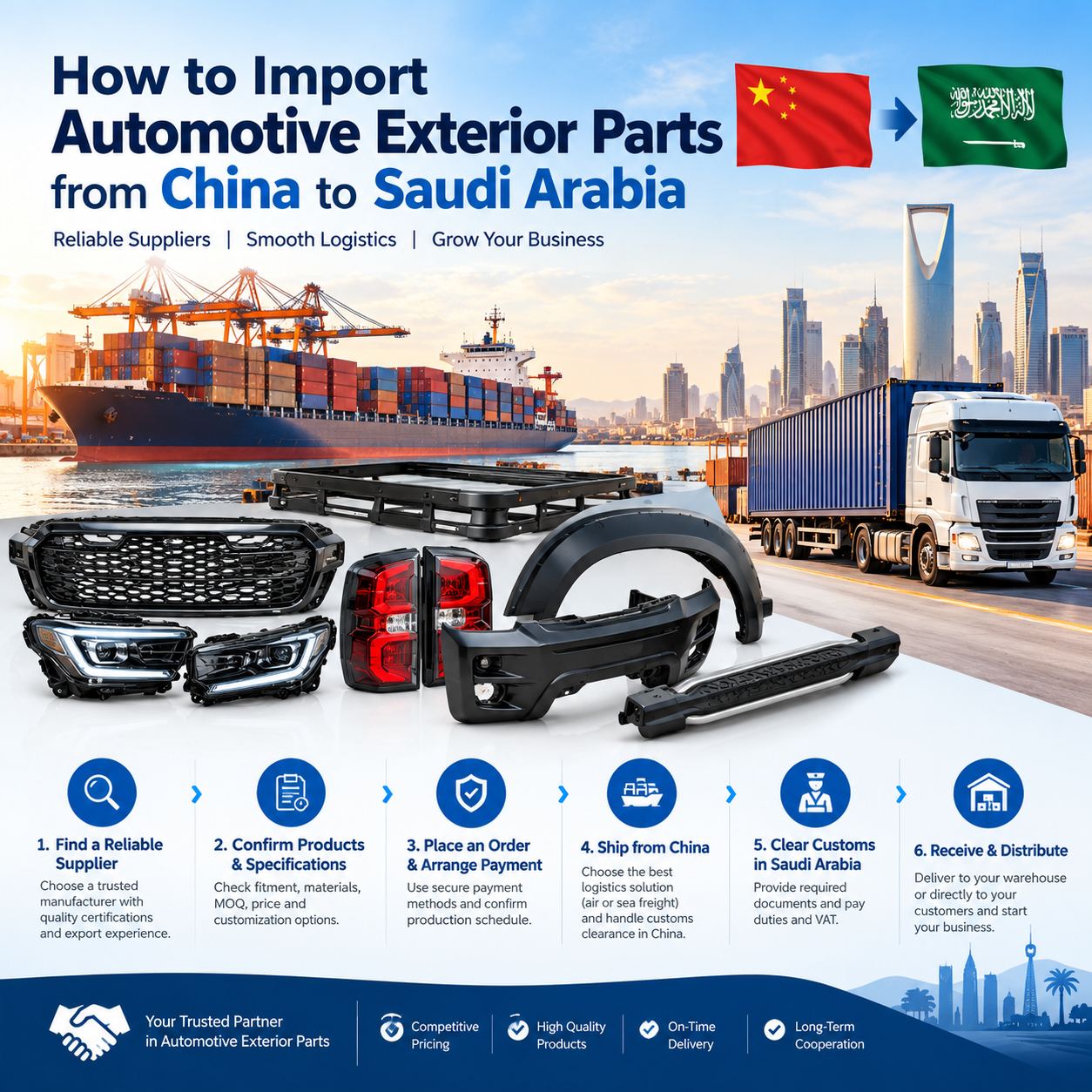 Saudi Arabia has a strong and growing market for pickup trucks, SUVs, 4x4 vehicles, and automotive modification products. For distributors, wholesalers, auto repair shops, and modification businesses, importing automotive exterior parts from China can provide access to a wide range of products, comp
-
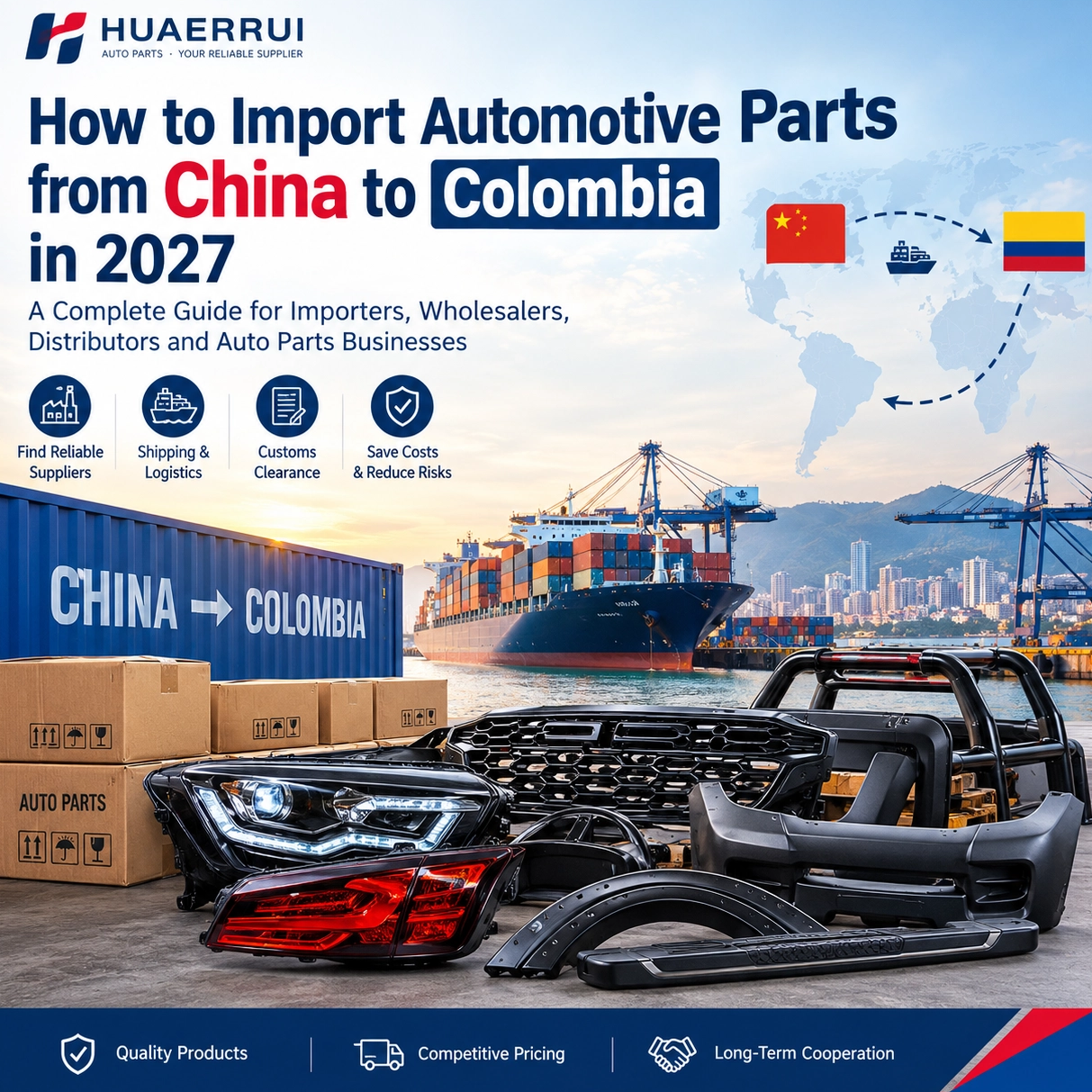 Importing automotive parts from China to Colombia can create valuable business opportunities for auto parts wholesalers, importers, distributors, repair shops, and automotive modification businesses. China offers a wide range of automotive products, including headlights, LED taillights, front grille

