






Importing automotive parts from China to Colombia can create valuable business opportunities for auto parts wholesalers, importers, distributors, repair shops, and automotive modification businesses. China offers a wide range of automotive products, including headlights, LED taillights, front grilles, bumpers, fender flares, body kits, and pickup truck accessories.
However, successful importing requires more than finding a low-priced supplier. Colombian buyers need to evaluate product quality, vehicle compatibility, minimum order quantities (MOQs), shipping costs, import duties, customs documentation, and after-sales support before placing bulk orders.
Working with a reliable automotive parts manufacturer in China can help businesses build a more stable supply chain, expand their product catalogs, and serve different customer segments.
In this guide, we explain how to import automotive parts from China to Colombia in 2027, how to choose a trustworthy supplier, what import requirements to verify, and how to control purchasing costs.
Why Import Automotive Parts from China to Colombia?
China is an important global manufacturing base for automotive components and aftermarket accessories. For Colombian businesses, sourcing automotive parts from China can provide access to a broad product selection and different price levels.
Competitive Pricing for Wholesale Automotive Parts
Chinese manufacturers offer automotive parts at different price points, depending on materials, product specifications, manufacturing processes, order quantities, and customization requirements.
For Colombian wholesalers and distributors, purchasing directly from a manufacturer may reduce sourcing costs and simplify communication compared with working through multiple intermediaries.
However, the lowest unit price does not always mean the best deal. Buyers should compare product quality, packaging, shipping expenses, import taxes, defect rates, and warranty terms before making a purchasing decision.
A Wide Range of Automotive Exterior Accessories
Chinese automotive suppliers produce a broad range of exterior accessories for passenger vehicles, SUVs, and pickup trucks.
Popular product categories include:
Headlights and LED headlight assemblies
Taillights and rear lamp assemblies
Front grilles and grille replacement panels
Bumpers and body kits
Fender flares and wheel arch extensions
Side steps and running boards
Roof racks and roof platforms
Pickup truck bed accessories and exterior styling parts
Purchasing multiple product categories from one qualified supplier may simplify sourcing and help distributors develop a more complete product catalog.
OEM Replacement Parts and Customized Styling Options
The automotive aftermarket serves different customer needs. Some customers want replacement parts that restore the original appearance of a vehicle, while others prefer modified styling, upgraded lighting, or off-road accessories.
Chinese automotive exterior parts manufacturers may offer original-equipment-style replacement products, aftermarket upgrades, and customized designs, depending on their production capabilities.
Before ordering, buyers should confirm whether the products are designed for direct replacement, require modifications, or need additional installation components.
Benefits of Working Directly with a Manufacturer
A direct relationship with an automotive parts manufacturer can improve communication about specifications, packaging, production schedules, and quality requirements.
For B2B buyers, a suitable factory partner should provide clear product information, realistic delivery estimates, consistent quality control, and responsive communication.
The goal is not simply to find a supplier with a low quotation. It is to establish a supply relationship that supports repeat orders and long-term business growth.
Which Automotive Parts Should Colombian Importers Consider?
Choosing the right products is an important step when entering or expanding in the Colombian automotive aftermarket. Importers should consider local vehicle applications, customer demand, selling prices, competition, and the availability of compatible replacement parts.
Headlights and LED Taillights
Automotive lighting is a useful category for distributors, repair shops, and specialized lighting retailers.
Common products include replacement headlight assemblies, LED headlights, rear lamp assemblies, smoked taillights, and customized lighting upgrades.
Before purchasing automotive lights, verify:
Vehicle make, model, and production year
Left-hand or right-hand driving compatibility where relevant
Connector types and electrical specifications
Lighting functions and beam performance
Applicable Colombian technical and regulatory requirements
Product packaging and protection against transportation damage
For wholesalers, offering multiple lighting styles and vehicle applications can help serve both replacement and modification customers.
Front Grilles and Replacement Grille Assemblies
Front grilles are popular products in the automotive exterior accessories category because they can replace damaged components or change a vehicle's appearance.
Buyers may consider factory-style replacement grilles, black grilles, honeycomb designs, and modified grille assemblies.
When evaluating a grille supplier, check material quality, mounting points, dimensions, surface finish, and compatibility with the intended vehicle.
For pickup and SUV accessory distributors, combining grilles with headlights, bumpers, and other exterior accessories may create additional sales opportunities.
Fender Flares, Bumpers, and Body Kits
Fender flares, bumpers, and body kits are relevant to businesses serving customers interested in exterior customization and off-road styling.
Product selection should be based on actual vehicle applications rather than appearance alone. Incorrect fitment can lead to installation problems, returns, and additional costs.
Ask the supplier for clear product photographs, dimensions, installation information, and vehicle fitment details before confirming an order.
Pickup Truck Accessories for Toyota Hilux and Ford Ranger
Pickup truck accessories can be a useful category to investigate when developing a product range for Colombia.
Potential products include accessories for Toyota Hilux and Ford Ranger applications, such as:
Front grilles and lighting assemblies
Fender flares and wheel arch trims
Side steps and running boards
Roof racks and cargo accessories
Bumpers and exterior styling components
Pickup-specific replacement parts
These are potential product opportunities rather than a guaranteed ranking of Colombian bestsellers. Importers should validate local demand, vehicle applications, and competitor pricing before purchasing substantial inventory.
How to Select Products Based on Local Customer Demand
Before placing a bulk order, research which vehicle models your customers own and which parts local businesses regularly request.
Speak with repair shops, accessory retailers, fleet service providers, and modification shops. Review competing product catalogs and compare local retail prices with the full landed cost of imported goods.
Start with a manageable selection of products, test customer response, and expand based on actual sales performance.

How to Find a Reliable Automotive Parts Manufacturer in China
Choosing the right supplier is one of the most important decisions in the import process.
A reliable automotive parts manufacturer should understand your product requirements, communicate clearly, provide consistent quality, and support repeat wholesale orders.
Manufacturer vs. Trading Company: What Should Buyers Know?
A manufacturer may offer direct access to production processes, product development, and quality control. A trading company may provide a wider range of products from different factories and simplify consolidated sourcing.
Neither business model is automatically better in every situation.
Buyers should determine which supplier structure best matches their needs. If you need customized exterior parts or recurring orders for specific vehicle applications, production capability and technical communication may be especially important.
If you need many unrelated product categories in small quantities, a trading company may offer useful consolidation services.
Check Factory Experience and Production Capacity
Before working with a new supplier, request information about its manufacturing experience, product categories, production processes, quality management, and export experience.
Useful questions include:
Which automotive parts does the factory manufacture?
Does it specialize in lighting, exterior accessories, or both?
Can it provide detailed product specifications and fitment information?
What is the MOQ for each product?
How does it inspect products before shipment?
Can it support repeat orders and customized requirements?
Where possible, verify the company's business information, production facilities, and relevant certificates independently.
Evaluate Product Fitment, Materials, and Certifications
Automotive parts must match the intended vehicle application and applicable requirements.
For lighting products, ask about beam performance, electrical specifications, light functions, and the documentation needed for the destination market.
For exterior accessories, review the materials, mounting structure, surface finish, dimensions, and installation requirements.
Do not assume that every product has the same certification requirements. Confirm which approvals or technical documents apply to the specific product and its intended use in Colombia.
Request Samples Before Placing a Bulk Order
Samples can help buyers evaluate the product before committing to a larger purchase.
Inspect the appearance, material quality, dimensions, mounting points, connectors, packaging, and functionality as applicable.
For vehicle-specific products, confirm compatibility with the exact model year and version. Keep approved samples, photographs, specifications, and written requirements as references for future production.
Compare MOQ, Wholesale Pricing, Warranty, and Lead Times
When requesting quotations, ask suppliers to provide a clear breakdown of their commercial terms.
Compare the following:
Purchasing factor | What to confirm |
|---|---|
Unit price | Price at different order quantities |
MOQ | Minimum quantity for each product or style |
Sample cost | Sample price and shipping charges |
Production lead time | Estimated time after order confirmation |
Packaging | Standard packaging and customization options |
Warranty | Coverage, exclusions, and claim procedures |
Payment terms | Deposit, balance, and accepted payment methods |
Shipping terms | Incoterms, shipment arrangements, and cost allocation |
Comparing these factors helps Colombian importers evaluate the total commercial value of a supplier rather than focusing only on the initial quotation.

Step-by-Step Process for Importing Auto Parts from China to Colombia
A structured purchasing process helps reduce communication errors, avoid unnecessary expenses, and improve order control.
Step 1: Research the Colombian Automotive Aftermarket
Identify your target customers before choosing products.
For example, a wholesaler serving repair shops may focus on replacement headlights, taillights, grilles, and commonly requested exterior components. A modification shop distributor may need customized grilles, fender flares, body kits, and pickup accessories.
Research local competitors, retail prices, product availability, and customer preferences. Use these findings to create a realistic purchasing plan.
Step 2: Identify Suitable Products and Vehicle Applications
Prepare a product list with detailed specifications.
Include vehicle make, model, year, product type, required quantity, material, color, and any special features. For lighting products, also specify connector types and lighting functions where relevant.
Avoid relying on general descriptions such as "Hilux taillight" when multiple versions exist. Precise specifications help suppliers quote the correct product and reduce fitment mistakes.
Step 3: Contact Manufacturers and Request Quotations
Send your product list to several qualified suppliers.
Ask for unit prices, MOQs, sample availability, production lead times, packaging details, and shipping options to Colombia.
For an efficient quotation process, provide your estimated order quantity and destination city or port. This allows suppliers or freight forwarders to prepare more relevant logistics estimates.
Step 4: Confirm Specifications, Samples, and Order Quantities
Review the quotation and verify the product details before confirming the order.
Make sure the pro forma invoice matches the agreed product specifications, quantities, unit prices, payment terms, and delivery conditions.
If samples are necessary, complete the evaluation before approving mass production. Any changes to specifications should be documented in writing.
Step 5: Arrange Payment, Production, and Quality Inspection
Use a documented payment arrangement and verify the supplier's business and banking details before transferring funds.
During production, maintain communication about progress and any changes that could affect delivery.
For larger orders, consider a pre-shipment inspection based on agreed acceptance criteria. Depending on the product, inspection may cover appearance, dimensions, functionality, labeling, packaging, and quantity.
Step 6: Prepare Export Documents and Shipping Arrangements
Coordinate with the supplier and freight forwarder to prepare the documents needed for export and import.
Common commercial and transport documents may include:
Commercial invoice
Packing list
Bill of lading or air waybill
Product specifications and supporting technical documents, where required
Certificate of origin, if applicable or needed to claim preferential treatment
Import permits or other authorizations, when required
The exact documentation depends on the product, shipment, trade terms, and Colombian import rules. Confirm the requirements before the goods leave China.
Step 7: Complete Colombian Customs Clearance and Local Delivery
Before shipment, work with a Colombian customs broker or qualified import specialist to verify the applicable tariff classification, duties, taxes, and import formalities.
Once the shipment arrives, the importer or authorized representative must complete the applicable customs procedures and settle the required charges before the goods can be released.
After clearance, arrange transportation to your warehouse, store, or distribution center. Check the delivered quantity and condition promptly and document any discrepancies.
Colombian Import Regulations, Tariffs, and Customs Requirements
Understanding the regulatory requirements is essential when importing automotive parts from China to Colombia.
Requirements can differ by product classification, technical characteristics, intended use, and current regulations. Importers should verify the rules for each product instead of applying one set of assumptions to an entire shipment.
Verify the Correct HS Code and Applicable Import Duties
Automotive parts may fall under different tariff classifications depending on their design, function, and specifications.
The HS code influences the applicable import duty and may determine whether additional requirements apply.
Before ordering, ask a Colombian customs broker to confirm the correct classification using the product's technical information. Also verify the applicable customs value rules, import duty, IVA, and any other relevant charges.
Do not rely solely on a supplier's suggested HS code or an online tariff estimate.
Check Importer Registration and RUT Requirements
Businesses importing commercial goods into Colombia should confirm their applicable tax registration and importer obligations.
The Registro Único Tributario (RUT), administered by DIAN, is an important part of Colombia's tax administration system. The specific registration and compliance requirements applicable to an importer should be confirmed with DIAN or a qualified local professional.
Before shipping, ensure the importer is prepared to complete the relevant procedures and provide the necessary documentation.
Understand DIAN Customs Procedures and VUCE Requirements
DIAN is Colombia's national tax and customs authority. The Ventanilla Única de Comercio Exterior (VUCE) is the country's foreign trade single-window platform used for applicable procedures and authorizations.
Depending on the goods, importers may need to check whether an import registration, prior license, permit, or other authorization applies.
Do not assume that every automotive part requires a VUCE authorization or that every product can be imported under identical procedures. Verify the applicable requirements for each tariff classification and product category before shipment.
Prepare Commercial Invoices, Packing Lists, and Transport Documents
Accurate documentation helps reduce discrepancies during customs processing.
Ensure the commercial invoice and packing list correctly identify the goods, quantities, values, and packaging. Product descriptions should be sufficiently detailed to support the tariff classification and customs declaration.
Check that the transport documents match the shipment details and that any required certificates or authorizations are available.
If information changes after booking, coordinate with the supplier, freight forwarder, and customs broker to correct the relevant documents as early as possible.
Check Applicable Requirements for Automotive Lighting Products
Headlights and taillights may be subject to technical, safety, labeling, or conformity requirements depending on their characteristics and intended use.
Before importing automotive lighting into Colombia, confirm whether the specific product is covered by any applicable technical regulation or conformity assessment requirement.
Ask the supplier for relevant test reports, technical specifications, and certificates, but independently verify whether those documents satisfy Colombian requirements. A certificate used in another country does not automatically establish compliance in Colombia.
Work with a Qualified Colombian Customs Broker
For first-time importers, a qualified customs broker can help review product classifications, documentation, applicable charges, and customs procedures.
Provide the broker with product photographs, specifications, material information, intended use, proposed HS codes, and shipment details.
Obtaining this review before placing a large order can help identify potential compliance issues before the goods are shipped.

Shipping Automotive Parts from China to Colombia
Shipping is a major component of the total import cost. The best shipping method depends on shipment volume, product value, delivery urgency, packaging dimensions, and destination.
Sea Freight vs. Air Freight for Automotive Parts
Sea freight is often worth evaluating for larger or heavier shipments, especially when the importer has sufficient inventory planning time.
Air freight may be suitable for samples, urgent replenishment, or smaller high-priority shipments, although the final cost can be substantially higher for bulky goods.
Compare actual quotations rather than assuming one method is always cheaper. For products such as grilles, bumpers, and roof accessories, dimensional weight and packaging volume can significantly affect transportation costs.
How to Choose Between LCL and FCL Shipping
Less-than-container-load (LCL) shipping allows importers to share container space with other shipments. It may suit businesses whose order volume does not justify a full container.
Full-container-load (FCL) shipping gives the importer dedicated container space and may become more economical as shipment volume increases.
When comparing LCL and FCL, include origin handling, freight, destination handling, documentation, customs-related costs, and final delivery.
A freight forwarder can calculate the estimated cost using the actual carton dimensions, gross weight, volume, and destination.
How Packaging Protects Headlights, Taillights, and Grilles
Automotive exterior parts often have large or irregular shapes, while lighting assemblies may contain fragile components.
Before shipping, confirm the packaging method with the supplier. Appropriate protection may include individual cartons, foam inserts, protective film, reinforced outer packaging, and palletization where suitable.
For high-value or fragile products, discuss whether additional inspection, handling instructions, or cargo insurance is appropriate.
Ask for packing photographs before dispatch and retain shipment records in case damage claims become necessary.
Calculate the Total Landed Cost of Imported Auto Parts
The unit price is only one part of the final cost.
A useful landed-cost estimate may include:
Product purchase price
Export packing and origin charges
International freight and insurance, where applicable
Import duties and IVA
Customs broker and clearance fees
Port, terminal, and handling charges
Local transportation and warehouse costs
Inspection, financing, and other applicable expenses
The exact cost depends on the product, tariff classification, valuation rules, shipment method, and contractual terms.
For wholesale pricing, divide the estimated total landed cost by the number of saleable units, while accounting for possible defects, handling losses, and other business expenses.
How to Reduce Shipping Costs for Bulk Orders
Importers can explore several practical ways to manage logistics expenses.
First, consolidate compatible products into planned shipments where this makes commercial sense. Second, confirm carton dimensions before production is complete. Third, compare quotations from multiple qualified freight forwarders using the same shipment information and service scope.
Finally, plan orders around realistic demand instead of frequently arranging small urgent shipments.
Do not sacrifice product protection or compliance simply to reduce freight costs. Damage, delays, and customs problems can cost more than the original savings.

How to Avoid Common Risks When Importing Automotive Parts
A good supplier relationship is important, but importers also need a clear process for controlling product, payment, and logistics risks.
Avoid Incorrect Vehicle Fitment and Product Specifications
Incorrect fitment is a common source of problems in the automotive aftermarket.
Confirm the vehicle generation, model year, trim, mounting points, connectors, and other relevant details before ordering. Where necessary, use sample testing or written confirmation from the supplier.
Keep approved product specifications attached to the purchase order so that both parties work from the same requirements.
Prevent Quality Issues Through Pre-Shipment Inspection
A product may look correct in photographs but still fail to meet the buyer's requirements.
Create a written inspection checklist that covers relevant product characteristics. For lights, this might include housing appearance, connectors, lighting functions, and visible defects. For exterior accessories, it may include dimensions, mounting points, finish, and packaging.
For substantial orders, arrange inspection before shipment and define how nonconforming products will be handled.
Confirm Payment Terms and Production Lead Times
Clarify the deposit, balance payment, production schedule, and shipment arrangements before placing an order.
Lead times can vary depending on inventory, customization, order quantity, and production capacity. Ask the supplier to confirm a realistic schedule and notify you promptly if a delay occurs.
Independently verify any unexpected changes to bank details or payment instructions through a trusted communication channel.
Check Packaging, Shipping Insurance, and Warranty Terms
Ask what protection is included in the standard packaging and whether additional packaging is available.
Confirm whether cargo insurance is appropriate for your shipment and understand its coverage and exclusions.
Warranty terms should clearly explain the covered defects, claim period, evidence required, and available remedies. Keep invoices, inspection records, photographs, and relevant communications to support any claim.
Calculate Profit Margins Before Confirming an Order
A product with a competitive factory price may still produce a weak margin if freight, taxes, handling, and local distribution costs are high.
Estimate the landed cost and compare it with realistic local selling prices. Include expected operating expenses and a reasonable allowance for defects or returns.
A smaller trial order can help you evaluate demand before committing substantial capital to a new product range.
Why Choose Huaerrui as Your Automotive Exterior Parts Supplier?
For Colombian importers and distributors, working with a supplier that understands automotive exterior accessories can simplify product sourcing and improve communication throughout the purchasing process.
Huaerrui serves B2B buyers looking for automotive exterior parts and vehicle lighting products for wholesale distribution, replacement applications, and modification businesses.
Factory-Direct Supply for B2B Buyers
Working directly with a manufacturer can help buyers discuss specifications, order quantities, packaging, and product requirements more efficiently.
For a successful long-term relationship, both parties should confirm product details, commercial terms, quality standards, and delivery expectations before each order.
Headlights, Taillights, Grilles, and Pickup Accessories in One Place
Huaerrui's product categories include automotive lighting and exterior accessories, such as headlights, taillights, front grilles, and selected pickup truck accessories.
For buyers who want to develop a broader catalog, sourcing related products from one supplier may help streamline quotation requests and product coordination.
Availability, vehicle applications, and minimum order quantities should be confirmed for each item.
OEM Replacement and Customized Styling Options
Different customers have different requirements. Some need replacement parts, while others look for customized exterior styling and modified lighting designs.
Huaerrui can discuss available product styles and specifications with buyers according to their intended vehicle applications and business needs.
Importers should provide detailed fitment information and confirm whether a selected product is a direct replacement or requires additional installation work.
Quality Inspection and Protective Export Packaging
Quality and packaging are important considerations when transporting automotive parts internationally.
Before production and shipment, buyers should confirm the agreed quality criteria, inspection arrangements, packaging specifications, and documentation.
Clear requirements help reduce misunderstandings and make repeat orders easier to manage.
Support for Wholesalers, Distributors, and Modification Shops
Huaerrui welcomes inquiries from automotive parts importers, wholesalers, distributors, retailers, and modification businesses seeking suitable exterior parts and lighting products.
When contacting the team, provide your target vehicle models, product list, estimated quantities, and destination in Colombia. This information helps the supplier prepare a more relevant quotation.

Frequently Asked Questions About Importing Auto Parts to Colombia
Is It Profitable to Import Automotive Parts from China to Colombia?
Importing can be profitable when products meet local demand and the selling price covers the full landed cost and operating expenses.
Profitability depends on competition, product quality, tariff classification, freight costs, exchange rates, and inventory turnover. Research local demand and calculate total costs before placing a bulk order.
What Documents Are Required to Import Auto Parts into Colombia?
Common documents include a commercial invoice, packing list, and bill of lading or air waybill. Depending on the product and shipment, additional certificates, technical documents, import registrations, licenses, or permits may be required.
Confirm the exact requirements with DIAN, the relevant authorities, and a qualified Colombian customs broker before shipping.
How Can I Find a Reliable Chinese Auto Parts Manufacturer?
Evaluate the supplier's manufacturing capabilities, product range, quality control, communication, MOQ, pricing, and delivery performance.
Request detailed specifications and samples where appropriate. Verify business information and relevant certificates, and establish written quality and commercial requirements before placing a substantial order.
What Is the Minimum Order Quantity for Wholesale Auto Parts?
MOQ varies by manufacturer, product, design, and whether the goods are in stock or made to order.
Some products may be available in smaller quantities, while customized products may require larger orders. Ask the supplier to quote based on your expected quantity and confirm whether different styles or products can be combined.
How Much Does It Cost to Ship Automotive Parts to Colombia?
Shipping costs depend on the origin, destination, shipment volume, gross weight, dimensions, shipping method, and current freight rates.
Request quotations using accurate carton dimensions and shipment details. Compare the total logistics cost, including origin and destination charges, rather than comparing only the headline freight rate.
Can I Order Headlights, Taillights, and Grilles from One Supplier?
Yes, some automotive exterior parts manufacturers supply multiple product categories. However, product availability and compatibility vary by supplier and vehicle application.
Ask for a catalog and confirm the MOQ, specifications, lead time, and packaging requirements for each item.
How Can I Request a Wholesale Quote from Huaerrui?
Prepare a list of the automotive parts you need, including vehicle models, model years, product types, quantities, and any customization requirements.
Share your destination city or port in Colombia and your preferred shipping arrangement if known. Huaerrui can then review the requirements and discuss available products, pricing, and order conditions.
Get a Wholesale Quote for Automotive Parts from China
Importing automotive parts from China to Colombia requires careful product selection, supplier evaluation, cost calculation, and compliance checks. With the right preparation, Colombian importers can build a more reliable supply chain and expand their automotive aftermarket product offerings.
Huaerrui supplies automotive exterior accessories and vehicle lighting products for B2B buyers seeking replacement parts and customized styling options.
Are you an automotive parts importer, wholesaler, distributor, or modification shop in Colombia?
Contact Huaerrui to discuss your product requirements and request a wholesale quotation.
Please include:
Vehicle applications: Make, model, and year
Product categories: Headlights, taillights, grilles, or other exterior accessories
Estimated order quantity: Your expected purchasing volume
Destination: Your city or port in Colombia
Special requirements: Custom styles, packaging, or technical specifications
Start building your automotive parts sourcing plan with a supplier that understands the needs of B2B buyers.

Related News
-
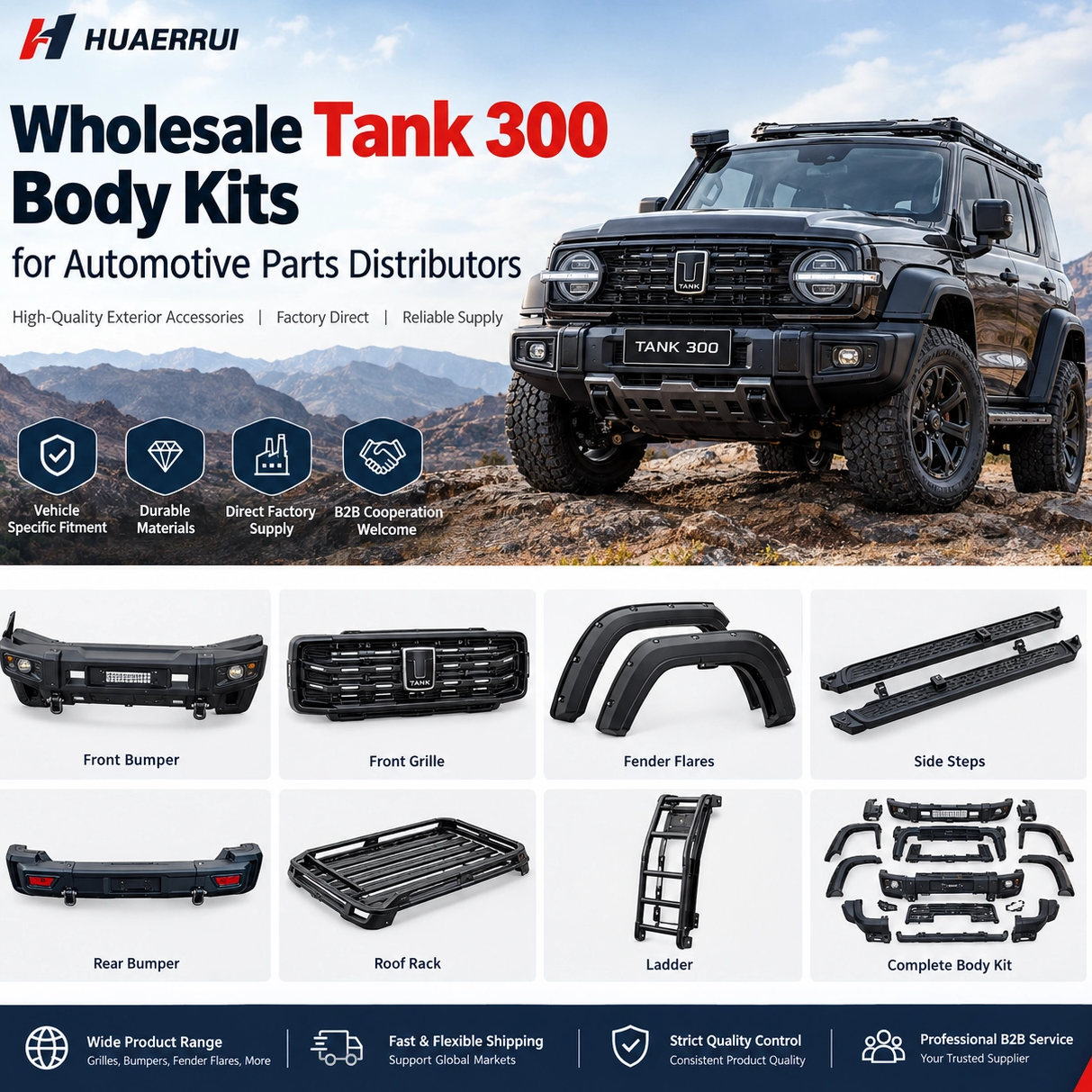 Wholesale Tank 300 Body Kits for Automotive Parts DistributorsIntroductionThe GWM Tank 300 has become a recognizable SUV platform in the automotive aftermarket, attracting interest from businesses specializing in off-road accessories, vehicle customization, and exterior styling upgrades. For automot
-
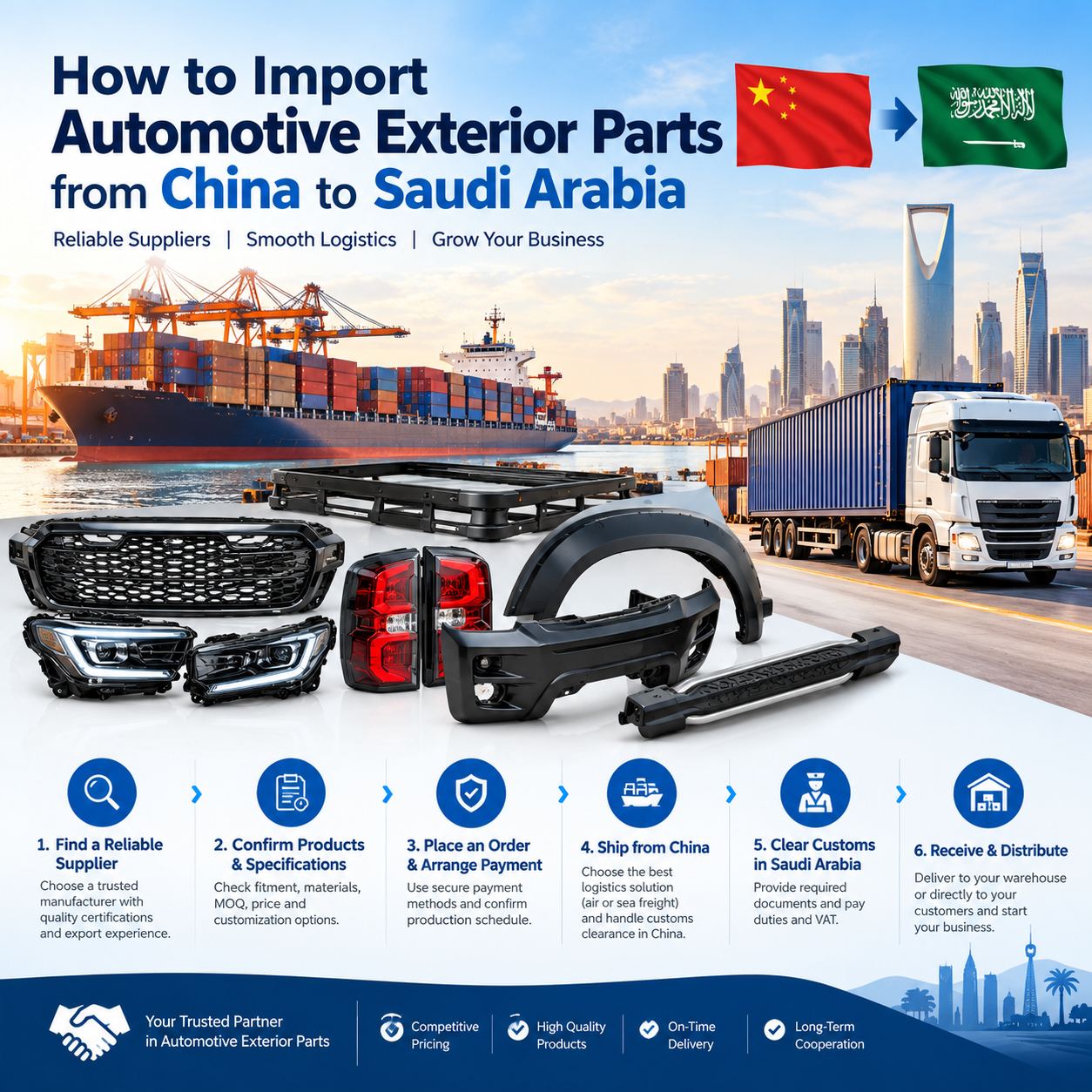 Saudi Arabia has a strong and growing market for pickup trucks, SUVs, 4x4 vehicles, and automotive modification products. For distributors, wholesalers, auto repair shops, and modification businesses, importing automotive exterior parts from China can provide access to a wide range of products, comp
-
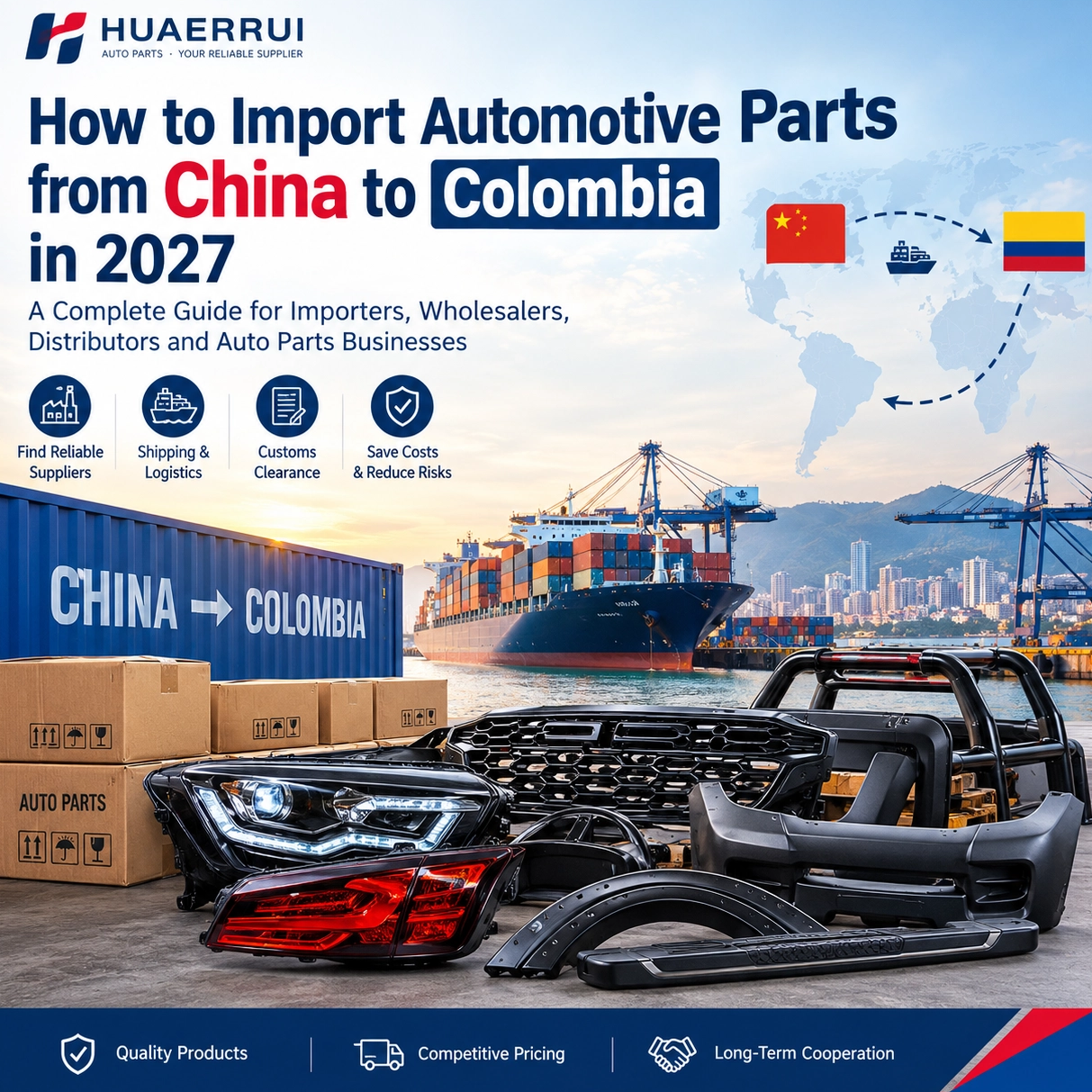 Importing automotive parts from China to Colombia can create valuable business opportunities for auto parts wholesalers, importers, distributors, repair shops, and automotive modification businesses. China offers a wide range of automotive products, including headlights, LED taillights, front grille

