





Pickup trucks are widely used for work, transportation, outdoor activities, and off-road driving. For automotive parts wholesalers, distributors, repair shops, and modification businesses, pickup truck lighting upgrades offer opportunities to serve both replacement-part customers and aftermarket enthusiasts.
From LED headlights and upgraded taillights to fog lights and auxiliary lighting, the right product selection can help businesses meet different customer requirements while building a competitive automotive lighting catalog.
However, wholesale buyers need to consider more than product appearance. Vehicle compatibility, product quality, wholesale pricing, minimum order quantities (MOQs), shipping costs, and local compliance requirements all affect purchasing decisions.
This guide explores the best automotive lighting upgrades for pickup trucks, explains how to evaluate products, and provides practical advice for sourcing pickup truck headlights and taillights from reliable suppliers in China.
Whether you are an importer, wholesaler, distributor, repair shop, or automotive modification business, this guide will help you make more informed purchasing decisions.
Why Pickup Truck Lighting Upgrades Are Important for Wholesale Buyers
Pickup truck lighting products serve several market segments, including vehicle maintenance, accident-damage replacement, customization, and off-road styling.
For B2B buyers, understanding these different applications helps create a product range that matches local demand.
Growing Opportunities in the Pickup Truck Aftermarket
Pickup trucks are popular in many markets, including North America, Latin America, the Middle East, and Southeast Asia. Their owners may require replacement lighting after accidents or choose aftermarket products to refresh their vehicles' appearance.
Different markets have different vehicle populations and customer preferences. Before purchasing inventory, wholesalers should research which pickup models are common in their target regions and which lighting products local customers request most frequently.
For example, businesses serving pickup owners may investigate lighting products for Toyota Hilux, Ford Ranger, Ford F-150, Nissan Frontier, and selected Chevrolet pickup models.
The best product opportunities depend on actual local demand, competition, purchasing costs, and product availability.
Meeting the Needs of Repair Shops and Modification Businesses
Not all customers purchase lighting products for the same reasons.
Repair shops generally need replacement lamps with accurate fitment and dependable functionality. Automotive parts distributors may prioritize broad application coverage, stable supply, and competitive wholesale prices.
Modification shops may prefer LED headlights, distinctive taillight designs, sequential turn signals, or other styling upgrades.
A diversified product catalog can help wholesalers serve these customer groups without relying entirely on one product category.
Balancing Product Quality, Wholesale Prices, and Profit Margins
A low purchase price does not necessarily mean a product will generate a higher profit.
Defective products, inaccurate fitment information, damaged packaging, and customer returns can increase the total cost of doing business.
Wholesale buyers should compare suppliers based on product specifications, quality-control procedures, MOQ, delivery schedules, warranty terms, and total landed cost.
A supplier that offers consistent specifications and clear communication may provide better long-term value than one that competes on price alone.
Choosing Lighting Products for Different Pickup Truck Applications
Before selecting products, define your main customer segment.
Replacement market: Standard headlights, taillights, and fog-light assemblies for vehicle repairs.
Upgrade market: LED headlights and updated rear-light designs for customers seeking modern styling.
Modification market: Customized lighting products for pickup customization and off-road styling.
Distribution market: Multiple lighting categories and vehicle applications for retailers and regional wholesalers.
This approach helps you select inventory according to customer needs instead of purchasing products simply because they are available.
What Are the Best Automotive Lighting Upgrades for Pickup Trucks?
The most suitable lighting upgrades depend on the vehicle, intended use, local regulations, and customer budget. For wholesale buyers, the following categories provide a useful starting point for product selection.
LED Headlights for Improved Visibility and Modern Styling
LED headlights are a popular category in the automotive aftermarket because they can combine a modern appearance with compact lighting designs.
Depending on the product and vehicle application, LED headlamp assemblies may offer integrated daytime running lights, distinctive lighting signatures, or other styling features.
For wholesale buyers, important evaluation points include:
Vehicle make, model, year, and trim compatibility
Low-beam and high-beam performance
Beam pattern and glare control
Electrical connectors and installation requirements
Heat management and sealing design
Applicable road-use compliance documentation
Do not assume that every LED headlight automatically provides better visibility than every halogen headlight. Actual performance depends on optical design, light distribution, installation, and testing.
When sourcing complete LED headlight assemblies, request technical specifications and relevant performance documentation before ordering.
Aftermarket Taillights for Replacement and Styling Upgrades
Taillights are another important category for pickup truck parts distributors.
They may be purchased for accident replacement, aging-lamp replacement, or vehicle customization. Available designs can include conventional replacement assemblies, LED taillights, and aftermarket styling options.
For example, wholesalers may investigate products for Toyota Hilux, Ford Ranger, and Ford F-150 applications according to the needs of their target market.
Before ordering, confirm:
Brake-light, turn-signal, and reverse-light functions
Left-side and right-side assembly identification
Connector type and wiring configuration
Lens and housing specifications
Vehicle year and trim compatibility
Relevant technical and road-use requirements
For modified taillights, also check the signal functions, light colors, visibility, and compliance requirements of the destination market.
LED Fog Lights for Selected Pickup Truck Applications
Fog lights can complement a pickup truck lighting catalog, particularly for replacement and selected upgrade applications.
Buyers should confirm the intended mounting position, connector type, vehicle compatibility, beam characteristics, and electrical requirements.
A fog-light assembly designed for one trim level may not fit another version of the same vehicle.
When comparing products, request application information and installation instructions rather than relying on appearance alone.
Daytime Running Lights and Integrated Lighting Designs
Daytime running lights (DRLs) are designed to improve vehicle conspicuity during daytime driving when fitted and operated appropriately.
Some aftermarket headlight assemblies integrate DRLs into the overall design, creating a distinctive appearance for vehicle upgrades.
For wholesale buyers, integrated lighting designs may appeal to customers who want to refresh the front end of their pickups.
However, buyers should verify wiring requirements, lighting functions, fitment, and relevant regulations before adding these products to their catalogs.
Auxiliary Off-Road Lights for Pickup Truck Accessories
Some pickup owners use auxiliary lighting for off-road activities or specialized work applications.
Products may include spotlights, work lights, and other auxiliary lighting options, depending on the vehicle and intended use.
These products should be evaluated according to their mounting requirements, electrical specifications, beam pattern, durability documentation, and legal restrictions.
Auxiliary lights intended for off-road use should not automatically be marketed as suitable for unrestricted public-road use.
Customized Headlights and Taillights for Modified Pickups
Customized lighting products can help modification shops offer distinctive styling choices.
Possible features include unique LED signatures, sequential indicators, darker styling elements, and integrated lighting designs, where available.
For B2B buyers, customization can create product differentiation but may also involve higher MOQs, sample-development costs, and longer production times.
Before committing to a bulk order, confirm the final appearance, technical specification, sample approval process, and compliance requirements.
LED vs. Halogen Headlights: Which Should Wholesalers Choose?
Both LED and halogen headlights can have a place in an automotive lighting catalog. The right inventory mix depends on the vehicles served, local purchasing preferences, and available budgets.
Differences in Lighting Technology and Performance
Halogen headlights use a heated filament to generate light, while LED headlights use light-emitting diodes.
LED products can offer compact designs and styling flexibility. Halogen products may remain relevant for older vehicles and customers seeking straightforward replacement options.
However, lighting performance cannot be judged by technology alone. Optical design, beam distribution, component quality, and correct installation all matter.
Product Costs and Wholesale Pricing Considerations
Purchase prices vary according to the vehicle application, design complexity, materials, electrical components, and order quantity.
Some customized LED assemblies may cost more than conventional replacement products. Nevertheless, the price difference should be evaluated against customer demand and the product's specifications.
Request quotations for comparable products and quantities. Confirm whether packaging, accessories, and other charges are included.
Vehicle Compatibility and Installation Requirements
LED and halogen assemblies may differ in connectors, wiring, power requirements, mounting points, and control systems.
A replacement product must match the intended vehicle application and operate correctly with its electrical system.
Do not assume that a product designed for one trim level can be installed on every version of the same pickup.
Customer Demand for LED and Halogen Replacement Lights
Repair-focused customers may prioritize accurate replacement fitment and cost. Modification customers may prefer distinctive designs and updated lighting technology.
The relative demand varies by country, vehicle age, and customer budget.
Review local sales records, customer inquiries, competitor catalogs, and repair-shop feedback before deciding how much inventory to allocate to each category.
How to Build a Balanced Headlight Inventory
For many distributors, a balanced catalog can include:
Frequently requested replacement headlights
Selected LED headlight assemblies
Replacement taillights for popular pickup models
Aftermarket taillight upgrades
Compatible fog lights and related lighting products
Start with verified demand and manageable order quantities. Expand the range after identifying products that generate repeat orders.
Best Pickup Truck Models to Consider When Sourcing Automotive Lights
Choosing the right vehicle applications is critical for automotive lighting wholesalers. The following models can be considered during market research, but their suitability depends on the vehicles actually sold and serviced in your target region.
Toyota Hilux Headlights and Taillights
Toyota Hilux lighting products may be relevant to distributors serving markets where this pickup is widely used.
Potential categories include replacement headlight assemblies, LED headlight upgrades, taillights, and fog lights.
Hilux lighting designs vary across generations, production years, trims, and markets. Buyers should verify the exact application before placing an order.
For example, a headlight for a newer Hilux generation should not be assumed to fit an earlier model.
Ford Ranger Headlight and Taillight Upgrades
Ford Ranger lighting products can serve replacement and customization markets.
Depending on local demand, buyers may investigate standard replacement lamps, LED assemblies, and aftermarket taillights for selected model years.
Confirm the generation, trim level, connector details, lighting functions, and mounting specifications.
If you plan to sell customized products, request samples and check whether any wiring changes or additional installation components are required.
Ford F-150 LED Lighting Upgrades
Ford F-150 lighting products may be relevant to North American distributors and businesses supplying pickup modification customers in other regions.
Potential categories include headlight assemblies, taillights, fog lights, and selected auxiliary lighting products.
Because F-150 configurations can differ significantly between model years and trims, accurate application identification is essential.
Ask suppliers for detailed fitment information and confirm the exact product version before approving bulk orders.
Nissan Frontier Replacement Lighting
Nissan Frontier lighting products may suit businesses serving customers who need replacement assemblies or aftermarket upgrades.
Buyers should confirm the relevant vehicle generation and market-specific configuration, as naming conventions and vehicle specifications may differ across regions.
Request the product reference, connector details, and fitment documentation before adding the product to your catalog.
Chevrolet Pickup Truck Lighting Products
Chevrolet pickup lighting applications may offer additional opportunities for distributors serving the relevant vehicle population.
Product selection should be based on the exact pickup model, production year, trim, and regional specification.
Do not assume that headlights or taillights are interchangeable across different Chevrolet models.
How to Verify Model Year, Trim, and Lighting Compatibility
Before ordering any pickup truck light, collect the following information:
Vehicle make and model
Production year and generation
Trim level or lighting configuration
Left-hand or right-hand assembly requirement
Connector and wiring specifications
Relevant product reference or original-part information
Installation and compliance requirements
When fitment remains uncertain, request a sample or additional technical information before purchasing in volume.
OEM Replacement Lights vs. Customized Aftermarket Pickup Truck Lighting
Understanding the difference between replacement and customized lighting helps wholesale buyers choose products that match their customers' needs.
Key Differences Between OEM-Style and Aftermarket Lighting
OEM-style replacement lights are generally designed to match a specified original vehicle application.
Aftermarket lighting may include replacement assemblies as well as products with different styling, materials, or lighting features.
The term OEM-style does not mean that a product is a genuine part supplied by the vehicle manufacturer. Buyers should confirm the product's origin and status rather than relying on terminology alone.
Replacement Headlights for Repair Shops and Parts Distributors
Replacement products are relevant to businesses serving vehicle repairs and routine parts replacement.
Important purchasing factors include accurate fitment, dependable functions, clear product identification, packaging, and warranty arrangements.
A well-organized application catalog can help distributors reduce ordering errors and improve inventory management.
Customized LED Taillights for Modification Businesses
Customized taillights can appeal to pickup owners seeking a different rear-end appearance.
Depending on the available catalog, options may include updated LED styling, distinctive signal designs, or different lens appearances.
For wholesalers, it is important to evaluate both appearance and function. Confirm the product's lighting performance, electrical compatibility, installation requirements, and compliance documentation.
Styling Options, Sequential Signals, and Distinctive Light Designs
Styling features may help modification businesses differentiate their offerings.
Examples include sequential indicators, integrated LED elements, and distinctive lighting signatures.
Availability varies by vehicle application and supplier. Buyers should verify the exact features offered by each product rather than assuming all designs include the same functions.
How to Select Products for Different Customer Segments
Consider separating your catalog into clearly defined product groups:
Standard replacement lighting for repair shops
LED upgrades for customers seeking updated styling
Customized assemblies for modification businesses
Auxiliary lighting for appropriate specialist applications
This organization makes it easier to present products to the right customers and manage purchasing priorities.
How to Choose High-Quality Pickup Truck Headlights and Taillights
Product quality affects customer satisfaction, return rates, and long-term business relationships.
Wholesale buyers should evaluate product specifications and inspection records before placing large orders.
Inspect Lens Materials and Lamp Housing Construction
Check the lens and housing for scratches, cracks, visible defects, and inconsistent assembly.
Request material information where it affects durability, fitment, or product performance.
Visual inspection is useful but cannot replace relevant testing or documentation for technical performance claims.
Check Electrical Functions and Connector Compatibility
Verify the product's electrical functions and connector design against the intended vehicle.
For headlights, relevant checks may include low beam, high beam, and integrated lighting functions. For taillights, check brake lights, turn signals, reverse lights, and other specified features.
Confirm that the product matches the vehicle's electrical system and does not require unapproved modifications.
Evaluate Sealing and Water-Resistance Performance
Lighting assemblies need suitable protection against environmental exposure for their intended application.
Ask suppliers about sealing design, inspection procedures, and available water-resistance test records.
Do not assume that every product is waterproof or has a specific IP rating unless that claim is supported by applicable documentation.
Verify Light Output and Beam Pattern Documentation
For headlights and other products that illuminate the road, beam distribution and glare control are important considerations.
Ask for applicable test reports or technical documentation that support performance claims.
A bright-looking light is not necessarily a well-designed headlight. Improper beam patterns can create visibility problems or glare for other road users.
Confirm Vehicle Fitment Before Bulk Purchasing
Check mounting points, dimensions, connectors, lighting functions, and production-year compatibility.
For applications with multiple trim levels, ask the supplier to identify any differences that affect installation.
Accurate fitment information is especially important for wholesalers selling products through online catalogs.
Request Samples and Quality Inspection Reports
A sample order gives buyers an opportunity to check the actual product before committing to larger quantities.
Compare samples against the agreed specifications and retain records of the approved product version.
For larger shipments, consider an appropriate pre-shipment inspection with written acceptance criteria.
How to Source Pickup Truck Lighting Upgrades from China
China is an important sourcing destination for automotive replacement parts and aftermarket accessories. Buyers can use a structured process to compare suppliers and reduce purchasing risks.
Find a Reliable Automotive Lighting Manufacturer
Search for suppliers with relevant pickup truck lighting products and a suitable export service capability.
Review the company profile, product catalog, technical documentation, and communication quality.
If direct manufacturing is important to your purchasing decision, verify which processes are performed in-house and which are outsourced.
Compare Factory Capabilities and Product Catalogs
Request product catalogs and application lists from potential suppliers.
Compare the available models, specifications, customization options, quality-control procedures, and order requirements.
A broad catalog is useful only when the supplier can provide accurate information and dependable product availability.
Request Wholesale Quotations and Minimum Order Quantities
Ask suppliers to quote the same product specifications and order quantities wherever possible.
Clarify:
Unit price and quotation validity
MOQ per product or vehicle application
Sample costs
Packaging specifications
Production lead time
Payment terms
Warranty and defect-handling procedures
Shipping terms and estimated costs
Written quotations make it easier to compare suppliers and plan purchasing budgets.
Evaluate Samples Before Placing a Bulk Order
Inspect samples for fitment, appearance, electrical functions, assembly quality, and packaging.
Where necessary, obtain professional technical evaluation or relevant test documentation.
Approve the sample and record the specifications that must be maintained during mass production.
Confirm Production Lead Times and Export Packaging
Ask whether products are available from stock or require production.
Confirm the expected production schedule, inspection arrangements, carton dimensions, gross weight, and shipment preparation process.
For customized products, allow additional time for sample approval and any required development work.
Arrange Shipping and Destination-Market Compliance Checks
Choose a suitable shipping method according to shipment size, urgency, and budget.
Confirm applicable import documentation, tariff classification, duties, taxes, and product-specific requirements in the destination market.
A freight forwarder and qualified customs broker can help clarify shipping and import procedures.
How to Calculate Wholesale Costs and Profit Margins for Pickup Truck Lights
Wholesale profitability depends on the full cost of sourcing and delivering the products, not just the supplier's quoted unit price.
Compare Unit Prices at Different Order Quantities
Request quotations at several realistic order quantities if your budget allows.
A higher volume may reduce the unit price, but it can also increase inventory costs and the risk of unsold stock.
Evaluate price breaks against actual sales forecasts and replenishment requirements.
Calculate Freight, Insurance, Duties, and Import Taxes
Depending on the shipping arrangement and destination, additional costs may include freight, insurance, customs duties, taxes, clearance charges, and local transportation.
Clarify which charges are included in the quotation and which are payable separately.
For accurate planning, use shipment-specific figures rather than generic freight estimates.
Estimate Total Landed Cost per Unit
A simplified landed-cost calculation is:
Landed cost per unit = Total product cost + total applicable import and logistics costs, divided by the number of sellable units received.
For a more accurate result, account for inspection charges, payment fees, damaged goods, and other relevant expenses.
The final calculation should use the actual costs applicable to your shipment and destination.
Account for Warranty Claims and Potential Returns
Defects, incorrect fitment, and shipping damage can affect profit margins.
Review the supplier's warranty terms and establish how claims are documented and resolved.
Where historical sales data is available, use it to estimate potential returns and evaluate the true commercial performance of each product category.
Build a Profitable Product Mix for Wholesale Distribution
Avoid allocating all your purchasing budget to a single expensive or highly customized product.
A balanced catalog may include frequently requested replacement lights, selected LED upgrades, and customized products that match verified demand.
Monitor sales performance and customer inquiries to decide which products deserve repeat orders.
How to Build a Competitive Pickup Truck Lighting Product Range
A well-planned catalog helps distributors serve more customers while controlling purchasing complexity.
Stocking Replacement Headlights and Taillights
Start with applications supported by reliable evidence of local demand.
Prioritize accurate fitment information, manageable MOQ, and products that can be replenished consistently.
Keep product references and application details organized to reduce ordering errors.
Adding LED Upgrades and Customized Lighting Products
After establishing a base of replacement products, consider adding selected aftermarket lighting designs.
Choose products according to local customer preferences and applicable road-use requirements.
Test new products on a smaller scale before expanding inventory.
Selecting Products for Different Pickup Truck Models
Build an application matrix listing vehicle models, production years, available lighting products, supplier references, and MOQ.
This helps purchasing teams identify catalog gaps and compare supplier coverage.
Update the matrix when new products become available or vehicle applications change.
Managing Inventory and Replenishment for B2B Customers
Track sales, inventory levels, supplier lead times, and customer inquiries.
Set replenishment priorities for products that generate repeat demand and are difficult to replace quickly.
For slower-moving products, consider sample-based ordering or smaller initial quantities where commercially feasible.
Expanding Your Catalog with Complementary Pickup Accessories
Lighting products can be offered alongside other pickup accessories when customers need a broader sourcing solution.
Depending on your business and supplier availability, complementary categories may include grilles, bumpers, fender flares, side steps, spoilers, roof racks, and other exterior accessories.
Offering multiple categories can help wholesalers serve modification shops and distributors seeking to consolidate purchasing.
Common Mistakes to Avoid When Buying Pickup Truck Lighting in Bulk
Avoiding common sourcing mistakes can help businesses reduce costs and improve customer satisfaction.
Choosing Products Based on Price Alone
Low-priced products may have different specifications, materials, or warranty terms.
Compare equivalent products and consider quality, fitment, documentation, and total landed cost before making a decision.
Ignoring Model Year and Trim Differences
Similar-looking pickup trucks may use different lighting assemblies.
Confirm the exact production year, trim, connector, and mounting details before ordering.
Incorrect fitment can create returns, additional shipping expenses, and customer dissatisfaction.
Overlooking Electrical Compatibility and Installation Requirements
A product may physically resemble the original assembly but still have incompatible connectors or functions.
Request technical information and installation requirements before placing a bulk order.
Failing to Verify Product Quality and Documentation
Do not rely entirely on product photographs or verbal assurances.
Request samples, check specifications, and review applicable test reports or inspection records.
Underestimating Shipping Costs and Inventory Risks
Freight, duties, taxes, and local delivery can materially affect the final product cost.
At the same time, purchasing excessive inventory may tie up working capital.
Plan order quantities around expected demand and realistic replenishment schedules.
Ignoring Warranty Terms and After-Sales Support
Before purchasing, clarify how defects, damaged goods, and incorrect products will be handled.
Record the warranty terms and agreed remedies in writing.
Clear arrangements can help prevent disputes when problems arise.
Why Work with HUAERRUI for Automotive Lighting and Pickup Accessories?
HUAERRUI focuses on automotive exterior accessories and vehicle lighting products for international B2B buyers.
For wholesalers, importers, distributors, repair businesses, and modification shops, the first step is to identify the product applications and supply requirements that match their target market.
Buyers should confirm the availability, specifications, and commercial terms of individual products directly with the supplier.
Automotive Exterior Parts and Lighting Product Options
Businesses sourcing several categories of exterior parts may benefit from evaluating compatible product options through one supplier.
Depending on catalog availability, buyers can inquire about lighting products alongside other pickup truck exterior accessories.
Replacement Lighting and Aftermarket Styling Solutions
Different customers require different product styles and specifications.
When contacting HUAERRUI, specify whether you are sourcing standard replacement headlights, LED headlight assemblies, replacement taillights, or customized aftermarket lighting.
This makes it easier to identify relevant options and prepare a suitable quotation.
Product Selection for Different Pickup Truck Applications
Provide the vehicle make, model, production year, trim, and required lighting functions.
For customized products, also share reference images or technical requirements where available.
Accurate application details help reduce the risk of selecting incompatible products.
Wholesale Inquiries and Product Specification Confirmation
Before placing an order, confirm MOQ, unit price, sample availability, lead time, packaging, and shipping arrangements.
Discuss applicable quality checks and warranty conditions, and document the final product specifications.
Long-Term Cooperation for Importers and Distributors
Long-term B2B cooperation depends on consistent communication, reliable order documentation, and clear expectations.
By planning repeat orders around actual demand and confirming product specifications in advance, buyers can build a more manageable sourcing process.
Contact HUAERRUI to discuss automotive lighting and exterior accessory requirements for your business.
Frequently Asked Questions About Pickup Truck Lighting Upgrades
What Are the Best Lighting Upgrades for Pickup Trucks?
Popular categories to investigate include LED headlights, replacement taillights, customized LED taillights, fog lights, and suitable auxiliary lighting. The best choice depends on vehicle compatibility, intended use, local regulations, and customer demand.
Are LED Headlights Better Than Halogen Headlights for Pickup Trucks?
LED headlights offer different design and styling possibilities, while halogen headlights remain relevant for many replacement applications. Actual performance depends on the product's optical design, beam pattern, compatibility, and installation rather than the light source alone.
Can I Buy Pickup Truck Headlights and Taillights in Bulk from China?
Yes. Many Chinese automotive parts suppliers serve international wholesale buyers. Before placing an order, verify the supplier, product specifications, MOQ, sample quality, delivery terms, and applicable import requirements.
What Is the MOQ for Wholesale Pickup Truck Lighting?
MOQ varies according to the product, vehicle application, supplier, and customization requirements. Ask for the MOQ for each model and whether mixed-model orders are accepted.
How Do I Verify Pickup Truck Headlight Compatibility?
Confirm the vehicle make, model, production year, trim, connector type, mounting points, and lighting configuration. Request an application list and relevant technical information from the supplier before ordering.
Can Suppliers Provide Customized LED Taillights?
Some suppliers offer customized LED taillights, subject to their product range and development capabilities. Buyers should confirm the available designs, MOQ, development cost, sample approval process, lead time, and applicable compliance requirements.
How Can Wholesalers Reduce the Risk of Defective Automotive Lights?
Request samples, define acceptance criteria, verify relevant specifications, and review the supplier's inspection procedures. For larger orders, consider pre-shipment inspection and document the agreed warranty terms.
What Should I Check Before Importing Pickup Truck Lighting Products?
Check product compatibility, quality documentation, MOQ, pricing, packaging, shipping costs, warranty terms, and destination-market compliance. Calculate total landed cost before deciding on the order quantity.
Request a Wholesale Quote for Pickup Truck Lighting Upgrades
Choosing the right pickup truck lighting products can help wholesalers serve repair shops, automotive distributors, and modification businesses more effectively.
From replacement headlights and taillights to customized LED lighting, a carefully selected product range can support customer demand while helping businesses manage inventory and purchasing costs.
HUAERRUI welcomes inquiries from international B2B buyers interested in automotive lighting and exterior accessories.
To receive a more accurate quotation, please share:
Product type: Headlights, taillights, fog lights, or customized lighting
Vehicle application: Make, model, and production year
Order quantity: Estimated quantity per product
Product requirements: Specifications, lighting functions, and customization
Destination market: Country and city
Shipping preferences: If applicable
Looking for a pickup truck lighting supplier in China? Contact HUAERRUI to request product information, wholesale pricing, MOQ details, and a quotation for your next order.
Related News
-
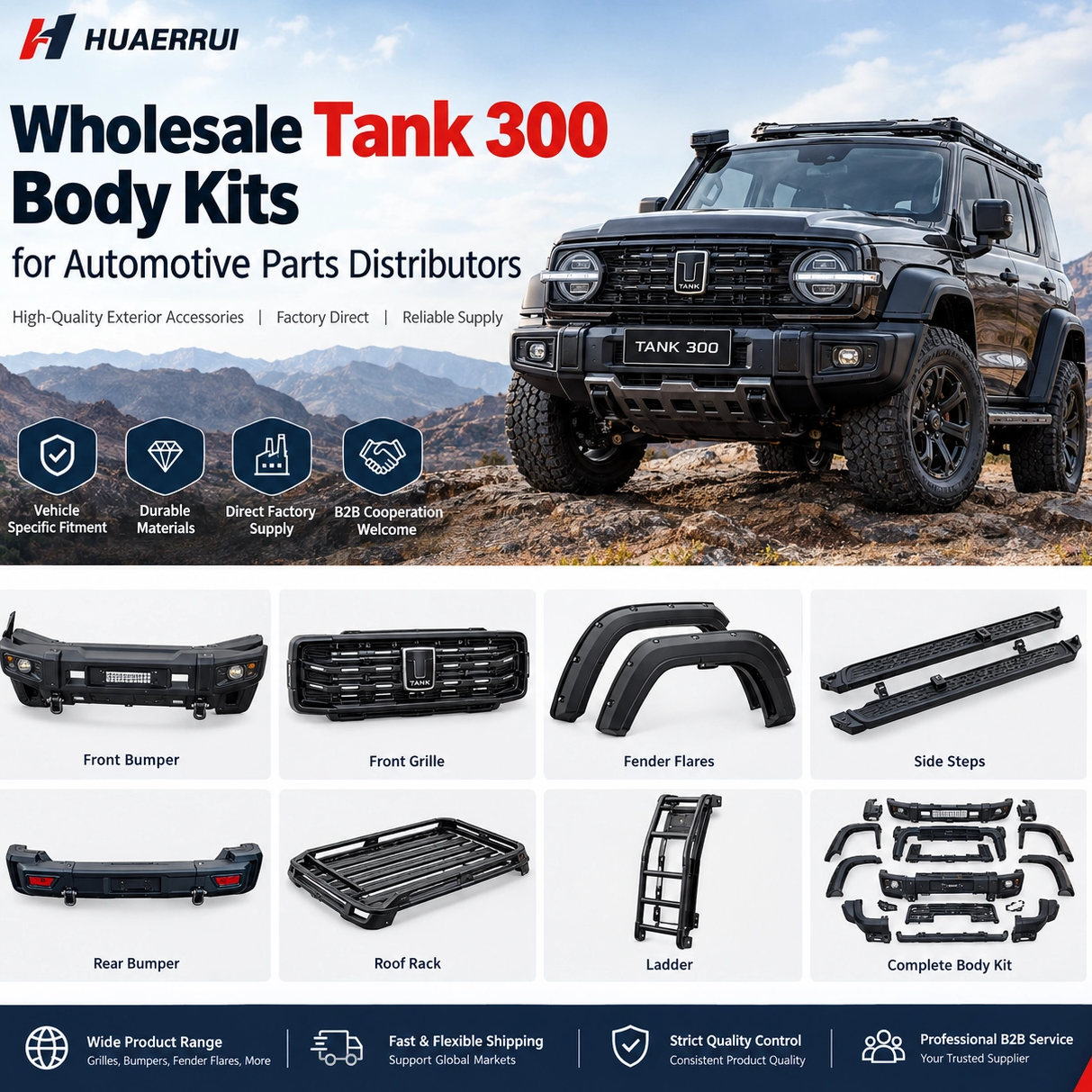 Wholesale Tank 300 Body Kits for Automotive Parts DistributorsIntroductionThe GWM Tank 300 has become a recognizable SUV platform in the automotive aftermarket, attracting interest from businesses specializing in off-road accessories, vehicle customization, and exterior styling upgrades. For automot
-
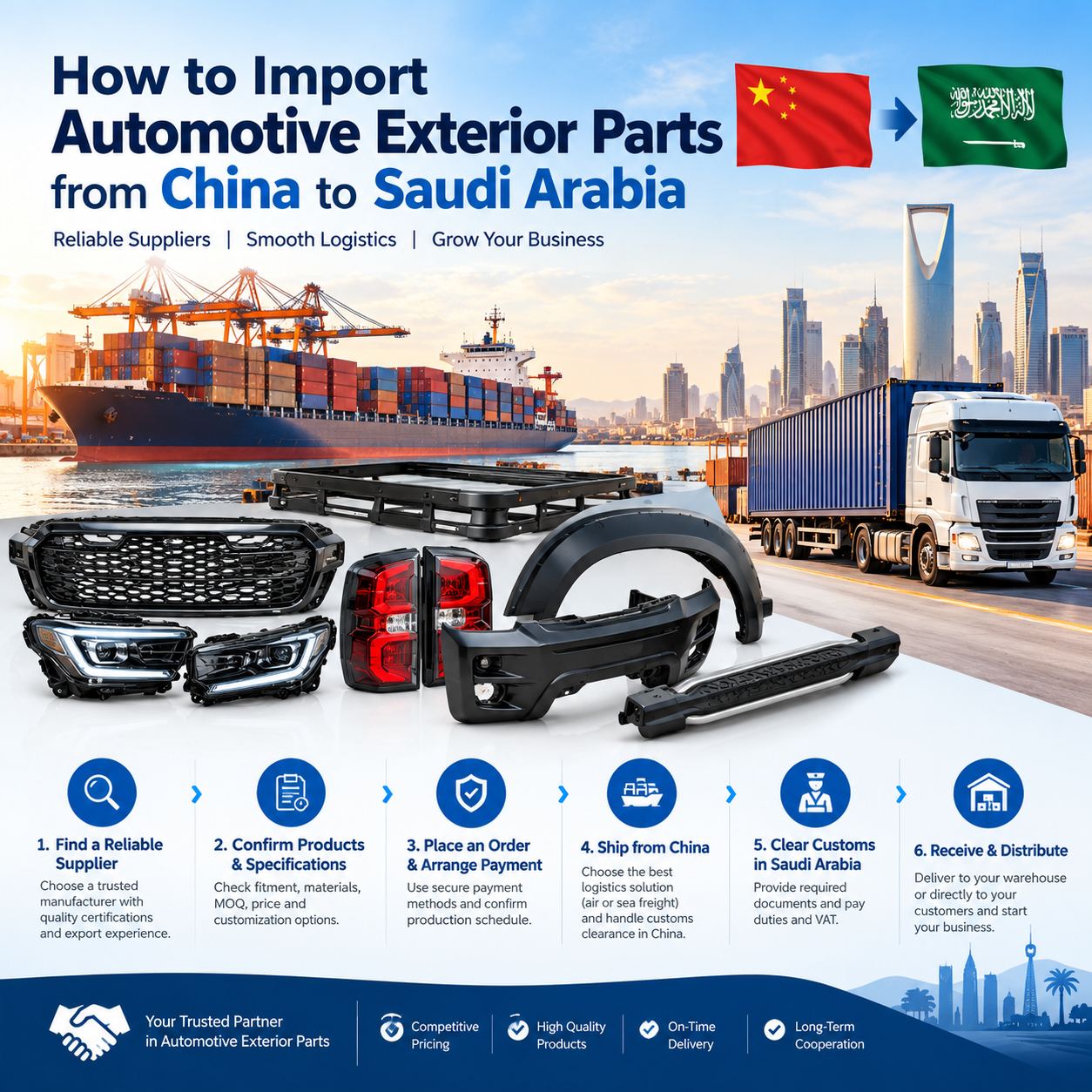 Saudi Arabia has a strong and growing market for pickup trucks, SUVs, 4x4 vehicles, and automotive modification products. For distributors, wholesalers, auto repair shops, and modification businesses, importing automotive exterior parts from China can provide access to a wide range of products, comp
-
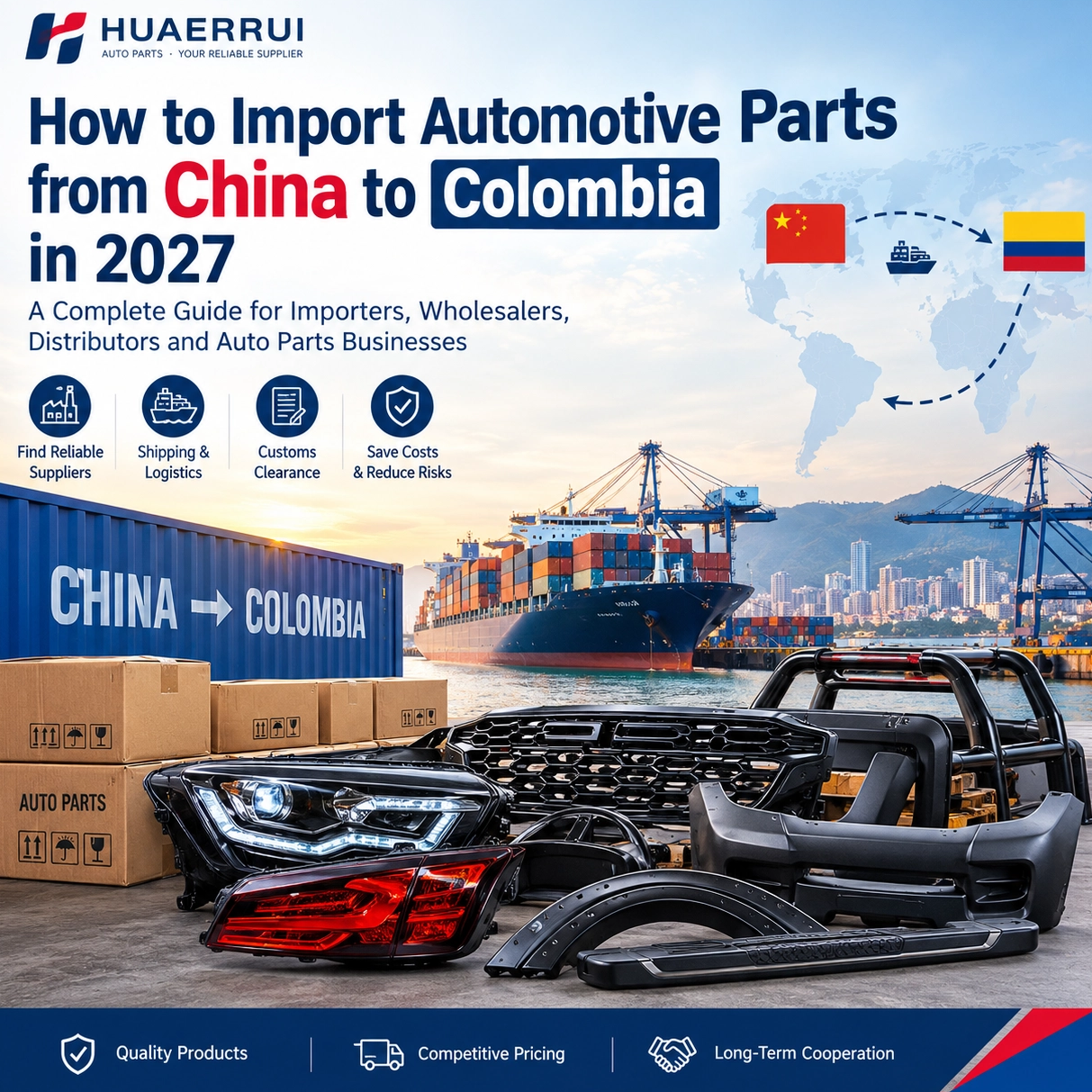 Importing automotive parts from China to Colombia can create valuable business opportunities for auto parts wholesalers, importers, distributors, repair shops, and automotive modification businesses. China offers a wide range of automotive products, including headlights, LED taillights, front grille

