





Introduction: Why Car Grille Material Matters
The front grille is more than just a styling component—it plays a key role in airflow, engine protection, and vehicle identity. For pickup trucks and SUVs, the choice of grille material directly affects durability, weight, appearance, and off-road performance.
Among the most common materials used in aftermarket and OEM grilles are ABS plastic, PP (polypropylene), and metal (aluminum or stainless steel). Each material has its own advantages and limitations, making it important to understand their differences before upgrading your vehicle.
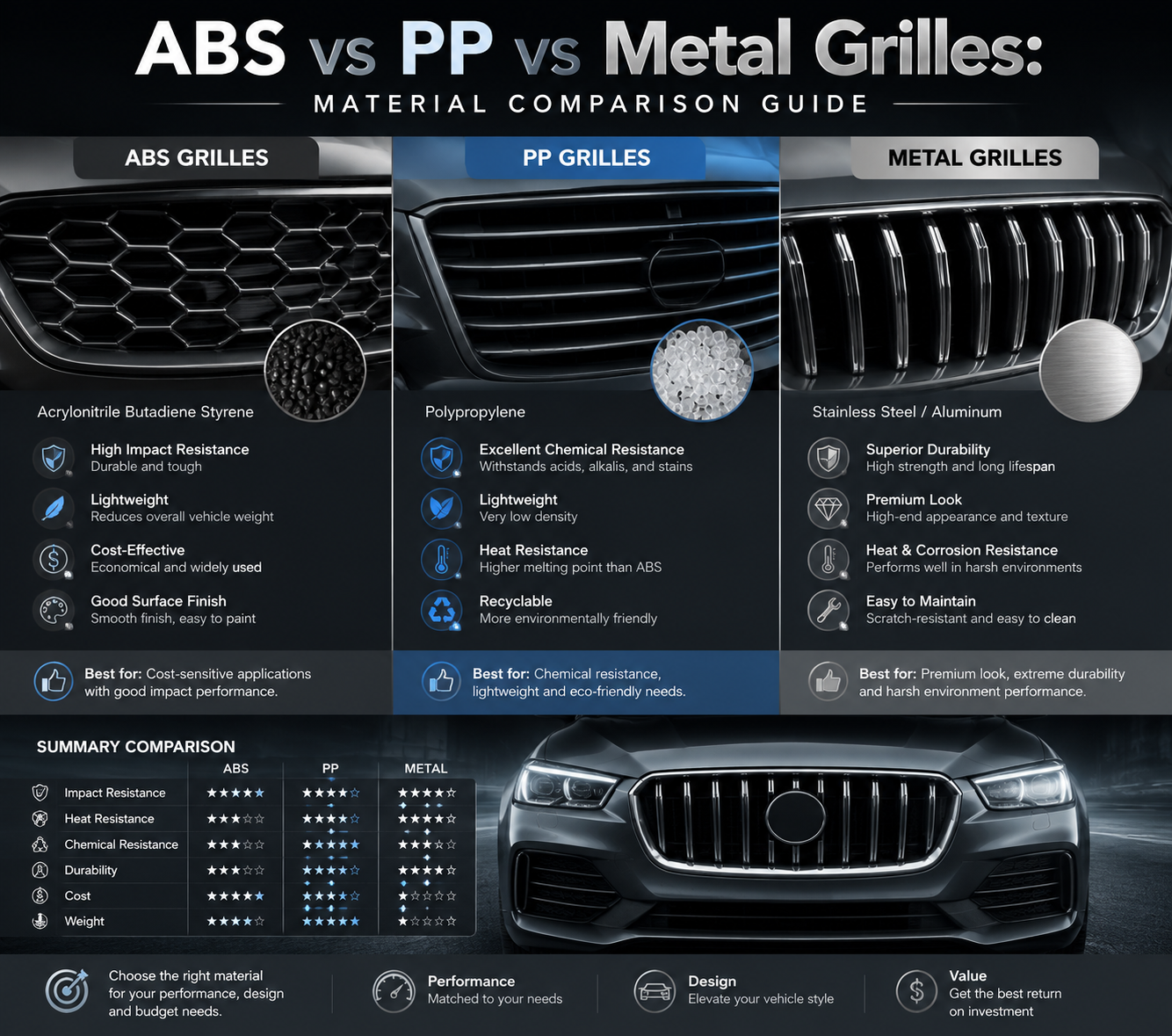
What Is ABS Material in Car Grilles?
ABS (Acrylonitrile Butadiene Styrene) is one of the most widely used materials in automotive exterior parts. It is known for its balance of strength, flexibility, and cost efficiency.
Key Features of ABS Grilles
ABS grilles are produced through injection molding, allowing for precise shapes and OEM-style designs. They are lightweight and easy to paint or chrome finish.
Advantages of ABS Front Grilles
Lightweight structure improves fuel efficiency
Excellent impact resistance for daily driving
Easy to mold into complex designs (mesh, honeycomb, Raptor style)
Cost-effective for mass production
Widely used in OEM and aftermarket upgrades
Disadvantages of ABS Grilles
Less heat resistance compared to metal
Can become brittle under extreme UV exposure over long periods
Not as strong as metal in heavy off-road conditions
Best Use Cases for ABS Grilles
ABS grilles are ideal for:
Daily driving vehicles
OEM replacement grilles
Styling upgrades for trucks and SUVs
Budget-friendly aftermarket modifications
What Is PP (Polypropylene) Material in Car Grilles?
PP (Polypropylene) is another type of thermoplastic commonly used in automotive parts. It is slightly more flexible than ABS and offers good chemical resistance.
Key Features of PP Grilles
PP is known for its elasticity and resistance to fatigue, making it suitable for parts that require slight bending or vibration absorption.
Advantages of PP Front Grilles
Excellent flexibility and vibration resistance
Strong chemical and moisture resistance
Lower cost than ABS in some applications
Good durability under mild impacts
Disadvantages of PP Grilles
Lower surface hardness compared to ABS
More difficult to achieve high-end glossy finishes
Less rigid structure for aggressive styling designs
Is PP Suitable for Off-road Vehicles?
PP grilles can be used in light off-road environments, but they are generally better suited for standard road use or entry-level aftermarket upgrades.
What Are Metal Grilles? (Aluminum / Stainless Steel)
Metal grilles are typically made from aluminum alloy or stainless steel, designed for maximum strength and heavy-duty protection.
Key Features of Metal Grilles
Metal grilles are cut, welded, or stamped into shape and are often used in premium off-road and heavy-duty truck applications.
Advantages of Metal Grilles
Extremely strong and impact resistant
High durability in harsh environments
Premium off-road appearance
Long service life under extreme conditions
Better protection for radiator and engine components
Disadvantages of Metal Grilles
Heavier than plastic materials
Higher production and shipping cost
Can be more difficult to install
Potential risk of corrosion if not properly treated
Heavy-Duty Applications of Metal Grilles
Metal grilles are commonly used for:
Off-road 4x4 trucks
Desert and rally vehicles
Heavy-duty commercial pickups
Extreme terrain driving conditions
ABS vs PP vs Metal Grilles: Side-by-Side Comparison
When choosing the right grille material, it is important to compare performance across key factors:
Durability Comparison
Metal: ★★★★★ (highest strength)
ABS: ★★★★☆
PP: ★★★☆☆
Weight Comparison
PP: Lightest
ABS: Lightweight
Metal: Heaviest
Cost Comparison
PP: Lowest cost
ABS: Medium cost
Metal: Highest cost
Appearance & Style
ABS: Best for detailed styling (mesh, honeycomb, Raptor style)
Metal: Aggressive off-road look
PP: Basic OEM appearance
Maintenance & Resistance
ABS: Good UV resistance with coating
PP: Good moisture resistance
Metal: Requires anti-rust treatment
Which Material Is Best for Your Vehicle Type?
Best Choice for Pickup Trucks (Ford F150 / RAM / Silverado)
ABS and metal are the most popular choices.
ABS for stylish street upgrades
Metal for off-road performance builds
Best Choice for SUVs (Toyota Prado / Land Cruiser / Patrol)
ABS is widely used for OEM-style replacement, while metal is preferred for adventure builds.
Best Choice for Off-road Vehicles
Metal grilles are the top choice due to maximum protection and durability.
Best Choice for Budget Buyers
PP grilles offer the most affordable solution for basic replacement needs.
OEM vs Aftermarket Material Choices Explained
OEM grilles often use ABS or PP materials to balance cost and performance. Aftermarket manufacturers, however, may upgrade materials or combine metal accents with plastic bases to achieve both strength and style.
For example, many modern Raptor-style grilles use:
ABS base structure
Metal mesh inserts
LED lighting integration
How Car Grille Manufacturers Choose Materials
Leading manufacturers select materials based on design requirements, cost targets, and performance standards.
Injection Molding for ABS & PP
ABS and PP grilles are produced using high-pressure injection molding, ensuring precision and mass production efficiency.
Metal Fabrication Process
Metal grilles are produced using:
Laser cutting
CNC forming
Welding assembly
Powder coating or anodizing
Quality Testing Standards
Professional grille factories test for:
UV resistance
Impact resistance
Heat tolerance
Fitment accuracy
Frequently Asked Questions (FAQ)
Is ABS stronger than PP?
Yes, ABS generally offers better rigidity and impact resistance than PP.
Do metal grilles rust?
Stainless steel and properly coated aluminum grilles are highly resistant to rust.
Which grille material lasts the longest?
Metal grilles typically have the longest lifespan under extreme conditions.
What is the best material for off-road driving?
Metal is the best choice for heavy off-road and rugged terrain use.
Conclusion: Choosing the Right Car Grille Material
Each grille material serves a different purpose:
ABS: Best balance of style, durability, and cost
PP: Budget-friendly OEM replacement option
Metal: Maximum strength for off-road and heavy-duty use
For most pickup truck styling upgrades, ABS remains the most popular choice due to its flexibility in design and cost efficiency. However, for extreme environments, metal grilles provide unmatched protection and durability.
Related News
-
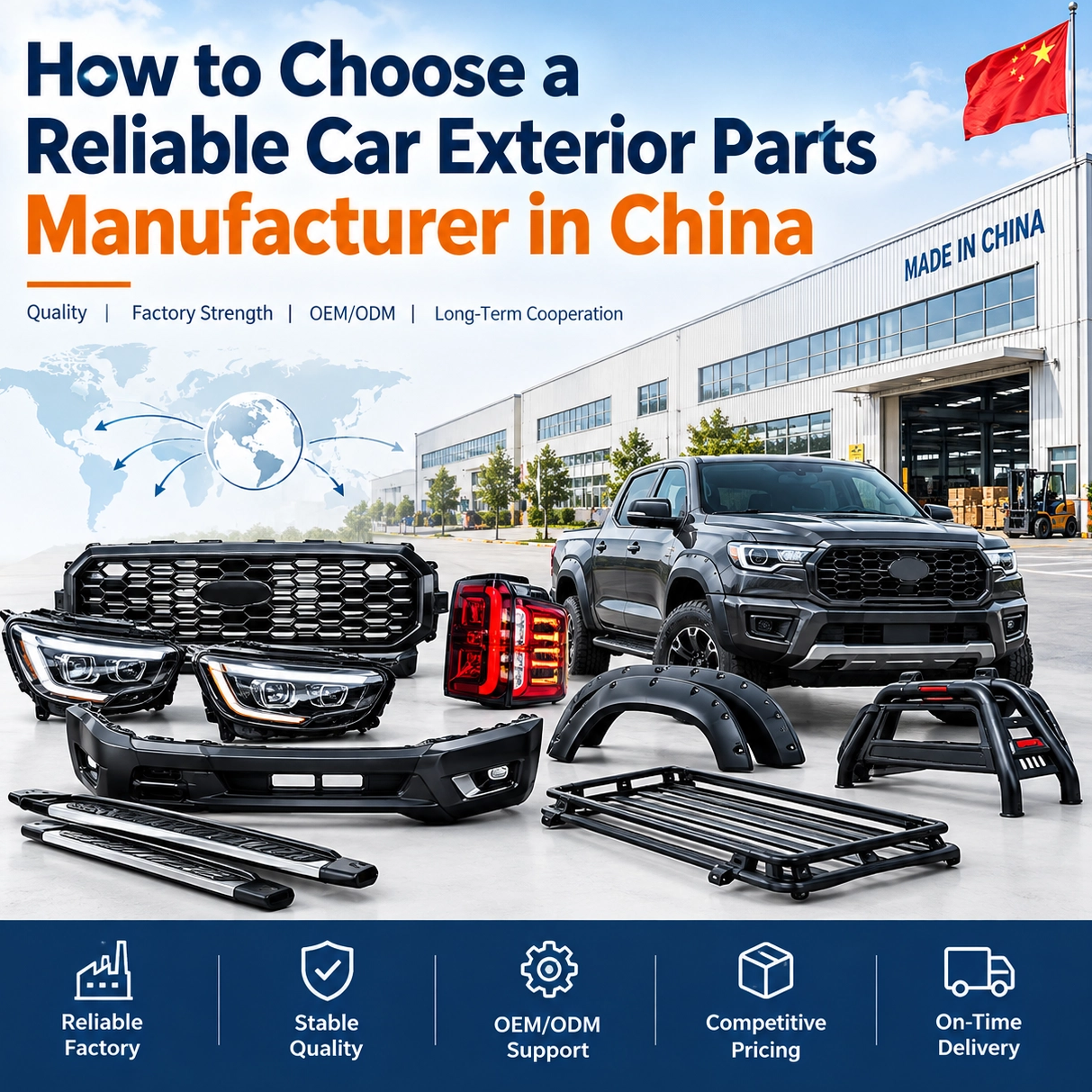 Finding a reliable car exterior parts manufacturer in China can help importers, wholesalers, distributors, modification shops, and repair businesses reduce purchasing costs while maintaining stable product quality. However, choosing the right factory is not simply about finding the lowest price.A pr
 -
 Saudi Arabia has a strong and growing market for pickup trucks, SUVs, 4x4 vehicles, and automotive modification products. For distributors, wholesalers, auto repair shops, and modification businesses, importing automotive exterior parts from China can provide access to a wide range of products, comp
 -
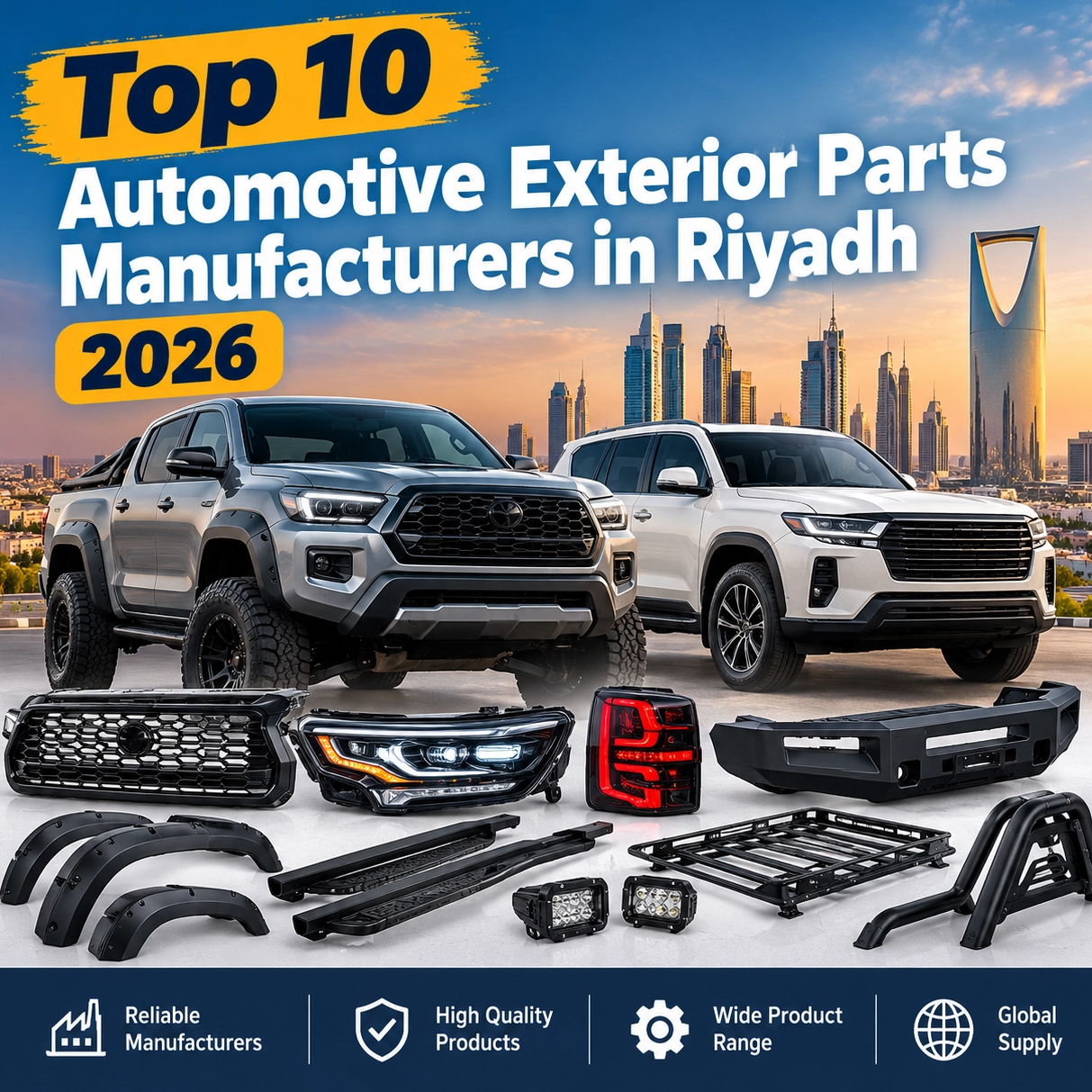 Automotive Exterior Parts Market in Riyadh, Saudi ArabiaRiyadh is one of the most important automotive markets in Saudi Arabia, with strong demand for passenger vehicles, SUVs, 4x4 vehicles, and pickup trucks. The city's large automotive aftermarket creates opportunities for automotive exterior part
